NEWS

Stay updated with our latest news, industry insights, and company developments.

Yoga Leggings for Women: Fit and Fabric Guide

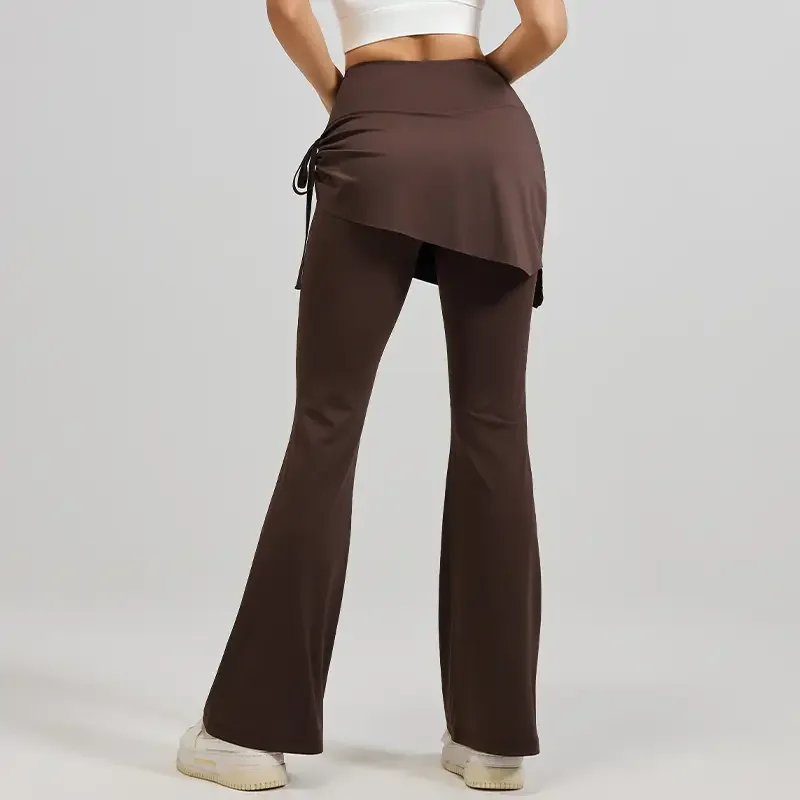
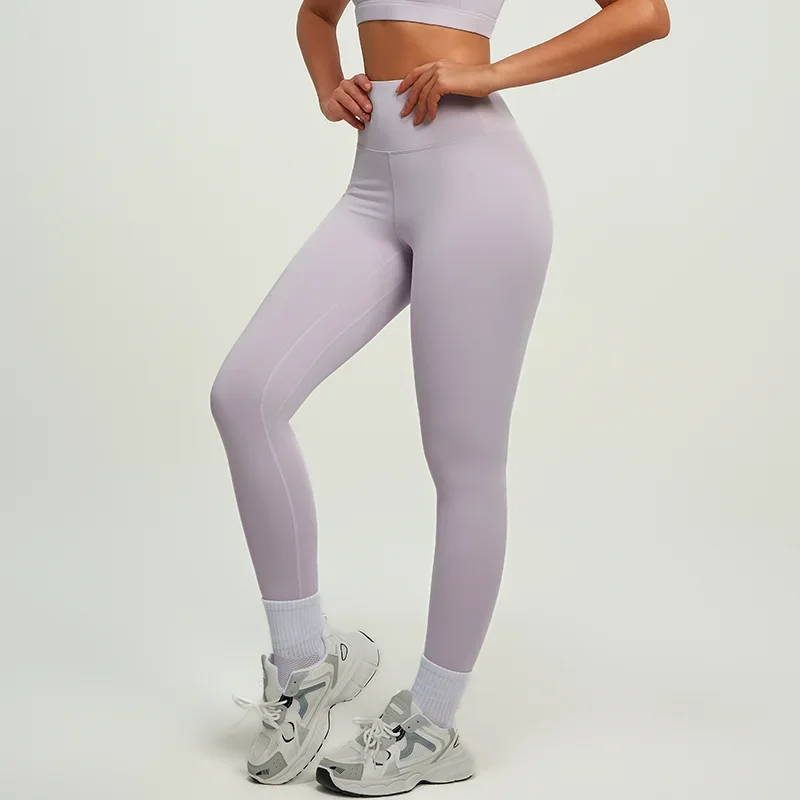
Small fit or fabric changes can transform the wearing experience of leggings. Our fitting process checks waistband height, rise, hip shaping, inseam, seam position, opacity, and recovery in the production-intent textile, because a pattern approved in one material can behave differently when stretch, weight, or surface finish changes.   The sourcing brief for custom yoga leggings starts by fixing the use case and fit profile. A soft studio legging, a firmer training style, and a compression-oriented bottom can use different material and pattern targets even when all three share a high-waisted silhouette.   Define Fit Through Movement, Not a Size Label Alone Women’s workout leggings involve more than waist and hip measurements. We review front and back rise, waistband stability, seat shaping, thigh compression, knee mobility, ankle opening, inseam, and seam placement so the fit standard reflects movement as well as static dimensions.   The waistband is especially important because it anchors the garment during bending and training. A high rise can provide coverage, but excessive tension may feel restrictive, while insufficient recovery can lead to rolling or slipping. We assess the waistband against the body fabric and construction so it supports the intended fit rather than correcting a weak pattern.  
Read More »

Top Custom Yoga Pants Manufacturer for Brands Seeking Flexible OEM Production

Launching or scaling a yoga apparel line comes down to one decision: who makes your product. With the global activewear market projected to grow from $345.79 billion in 2025 to $720.25 billion by 2034 at an 8.57% CAGR (Fortune Business Insights), the brands that secure capable manufacturing partners now will capture that growth. Pick the wrong partner, and you inherit late shipments, inconsistent stitching, and margins eaten by rework. Pick the right one, and custom yoga pants become a growth lever instead of a bottleneck. This guide walks through what to evaluate when comparing custom yoga pants manufacturers and yoga pants suppliers,  and how JoeBond approaches OEM (original equipment manufacturing) and ODM (original design manufacturing) production for brands at different stages. Why Do Brands Struggle to Find a Reliable Custom Yoga Pants Manufacturer? Most sourcing problems trace back to one root cause: suppliers that promise flexibility but cannot actually scale production without sacrificing lead time or quality. A factory built for small trial runs often cannot handle a 50,000-unit reorder on the same terms. As a result, brands get stuck switching manufacturers mid-growth, which resets tooling, sampling, and quality baselines. This matters because yoga pants sourcing is time-sensitive by nature. Retail

Read More »

Custom Yoga Pants with Logo: Fabric and Printing Options

Our logo workflow for performance bottoms begins before artwork placement is finalized. Stretch zones, waistband construction, fabric texture, heat sensitivity, seams, and abrasion points are mapped during development so the branding method can be built into the garment instead of added after the technical decisions have already been made.   Fabric selection for custom yoga pants establishes the surface and stretch conditions the logo must survive. Nylon-spandex, polyester-spandex, seamless, brushed, ribbed, and other performance constructions can respond differently to print films, embroidery, labels, heat, and repeated extension, so our material and branding teams evaluate them within the same sample cycle.   Select Fabric Before Selecting the Logo Process During development of custom yoga pants with logo, our team maps high-stretch and high-friction zones before fixing the artwork coordinates. A waistband mark, thigh graphic, or lower-leg logo faces different mechanical loads, and that garment map guides both placement and decoration method.   Smooth surfaces can support crisp graphics, while ribbed or brushed textiles can alter edge definition and adhesion. We test the actual fabric to confirm stretch response, heat tolerance, and surface compatibility before a branding process is approved for the style.   Garment color and artwork are approved in the same

Read More »

Wholesale Athletic Skirts: Fabric and Fit Buying Guide

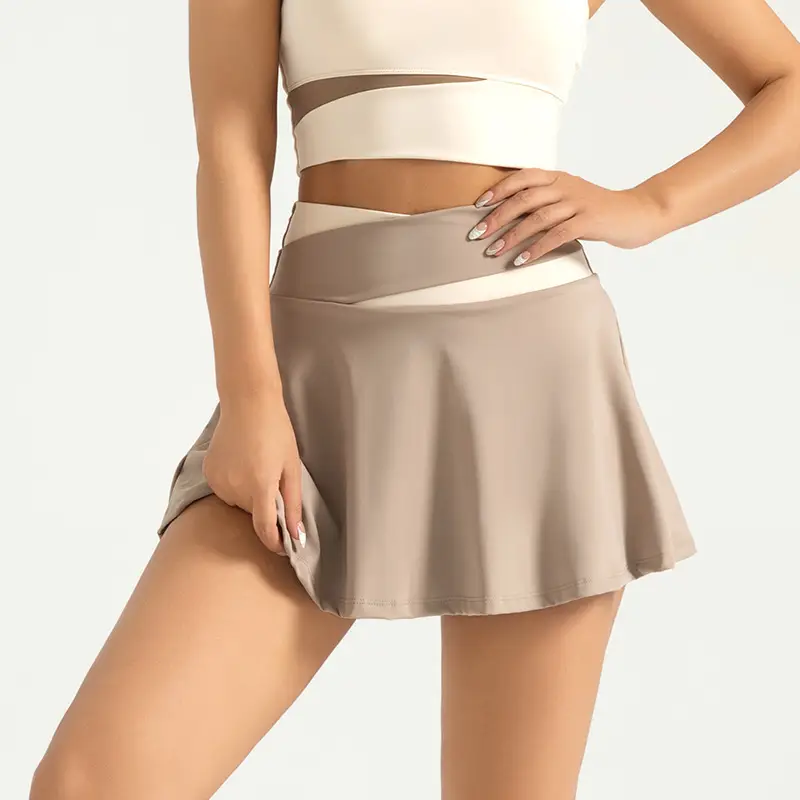
Athletic skirts have to perform through movement while maintaining a clean outer silhouette. Before volume or color planning begins, our team reviews waistband stability, inner-short coverage, hem behavior, pocket loading, stretch, recovery, and opacity against the intended use in yoga, training, tennis, running, or everyday activewear.   A program for custom yoga skirts requires the fabric specification to follow the silhouette. Pleats, fitted skorts, A-line shapes, ruching, or overlay panels change the load on the textile and inner construction, so our sampling process tests the actual skirt structure rather than applying one generic material standard across the category.   Match Fabric Properties to the Skirt Structure A yoga skirt with integrated shorts needs fabric choices that work as a system. The outer layer may require drape or shape retention, while the inner short needs stretch, recovery, coverage, and comfort against the skin. We compare both layers under movement instead of approving them as unrelated materials.   Nylon-, polyester-, and spandex-based performance options are compared by hand feel, durability, surface appearance, stretch, drying behavior, and the buyer’s sustainability requirements. Our lab and sample review focus on the actual fabric rather than a shorthand reference, because composition alone does not define weight, opacity, recovery,

Read More »

Long Sleeve Yoga Crop Tops: Trend and Sourcing Guide

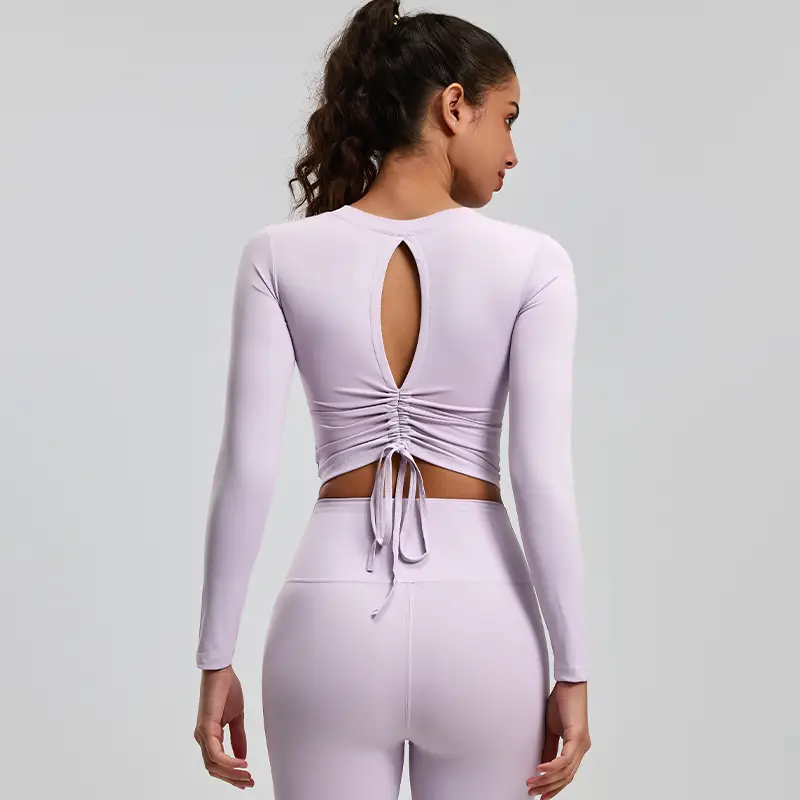
Cropped long-sleeve tops can add training function, layering, and fashion direction to the same activewear range. Our development process separates the visual trend from the manufacturing decisions behind it, allowing silhouette ideas to evolve while fit, material behavior, timing, and repeatability stay controlled.   For custom long sleeve shirts, the key questions include crop length, sleeve proportion, neckline, back treatment, closure, stretch level, layering intent, and target size range. Defining those points early gives the development team a usable specification and makes it easier to compare variations without turning every new silhouette into a completely separate process.   Build a Trend Direction From Wearable Silhouettes Long sleeve yoga crop tops can differ substantially even when the overall category name is the same. Seamed crops, half-zip constructions, ruched backs, hollow-out details, ribbed fabrics, V-necks, cross-back shapes, layered looks, and relaxed versions each change how the garment sits and how it pairs with leggings, skirts, or pants.   Before selecting details, we ask the buyer to assign a clear role to each style. A close-fitting studio top may prioritize stretch recovery and secure coverage, while a looser layering piece can allow more ease and a softer drape. A half-zip version introduces hardware and

Read More »

How to Add Logo Branding to Custom Short Sleeve Shirts?

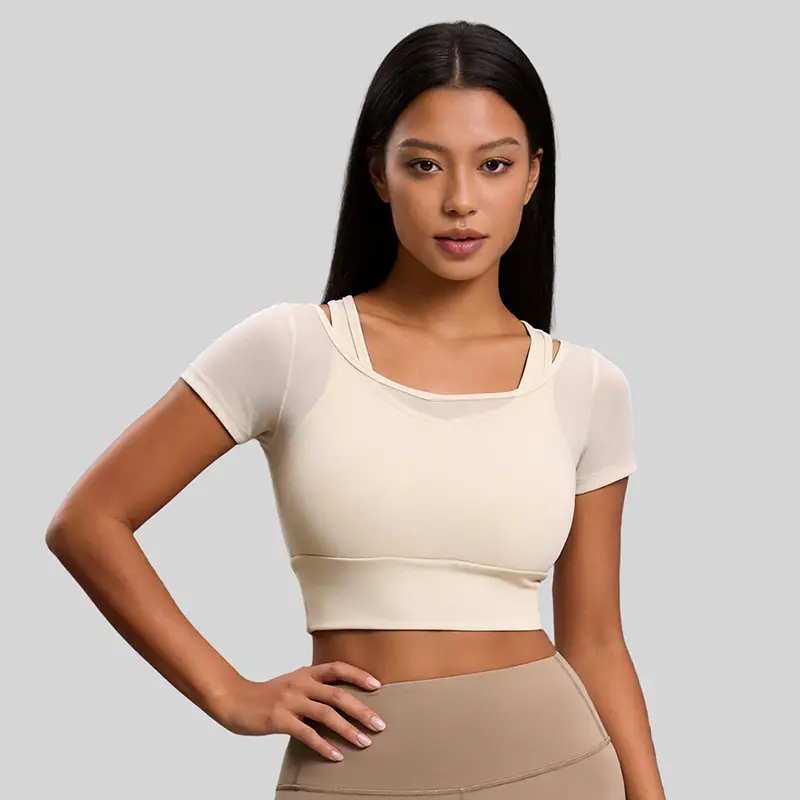
We plan activewear logo branding as part of manufacturing from the first sample. Placement, scale, fabric stretch, heat exposure, stitch density, and washing conditions all influence durability, so our branding decisions are developed alongside fit and fabric instead of being attached after the shirt is technically finished.   For custom short sleeve shirts, our team begins with silhouette, textile behavior, neckline, body length, seam construction, and intended use, then matches the logo process to those conditions. This integrated approach lets printing, embroidery, labels, and packaging move through sampling and bulk production under the same control points as the garment itself.   Choose Placement From the Garment, Not From a Flat Mockup A yoga top short sleeve stretches and moves differently across the chest, shoulder, sleeve, and hem, so a logo that appears centered on a flat drawing may shift when the top is worn. We review the artwork on the actual pattern and sample to judge its position in relation to seams, neckline, body proportions, and movement zones.   Mechanical stress varies by logo location. A small chest mark may extend less than a wide torso graphic, while sleeve branding sits closer to curved seams. Our team evaluates those conditions to

Read More »