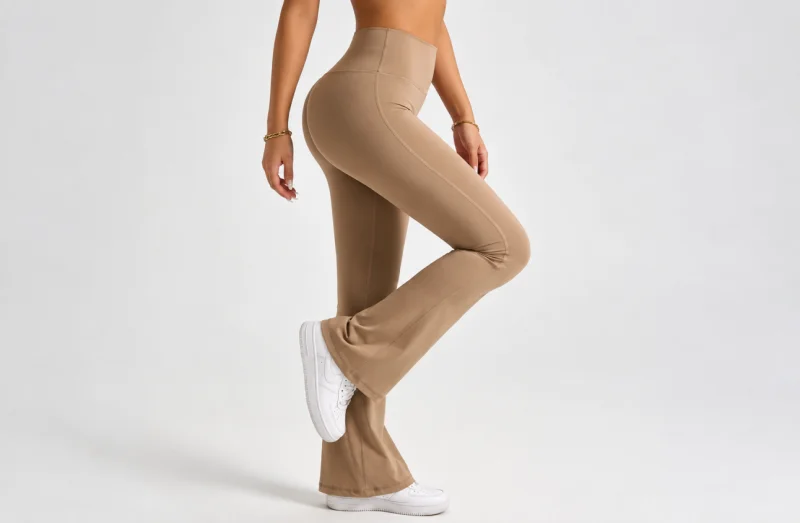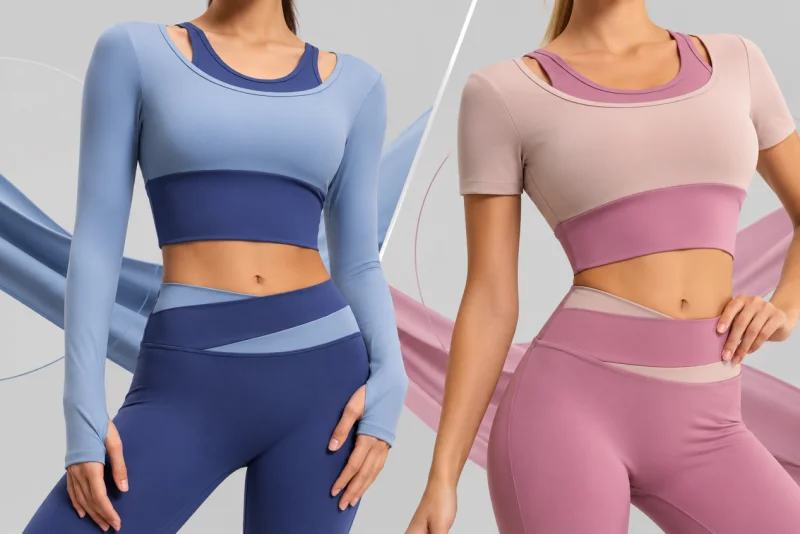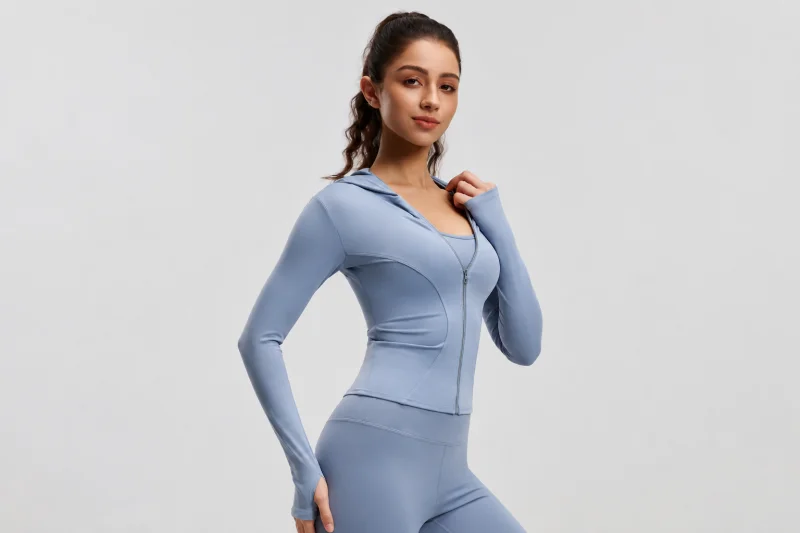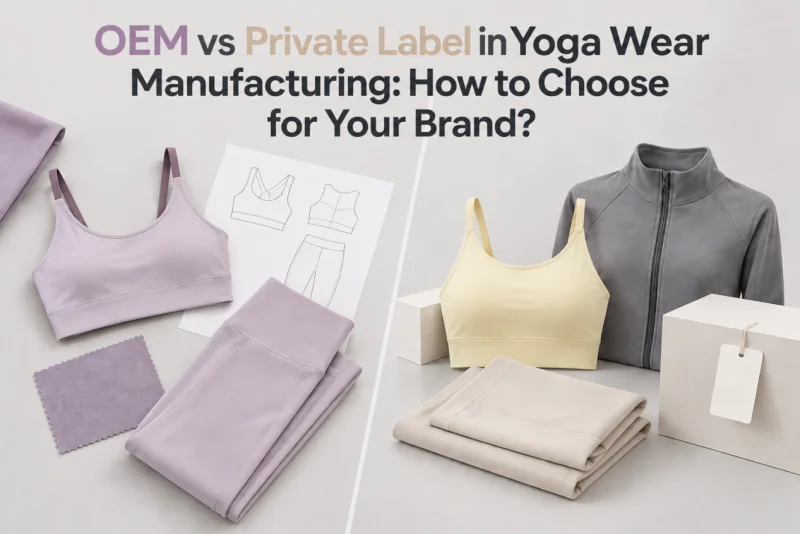
Small fit or fabric changes can transform the wearing experience of leggings. Our fitting process checks waistband height, rise, hip shaping, inseam, seam position, opacity, and recovery in the production-intent textile, because a pattern approved in one material can behave differently when stretch, weight, or surface finish changes.
The sourcing brief for custom yoga leggings starts by fixing the use case and fit profile. A soft studio legging, a firmer training style, and a compression-oriented bottom can use different material and pattern targets even when all three share a high-waisted silhouette.
Define Fit Through Movement, Not a Size Label Alone
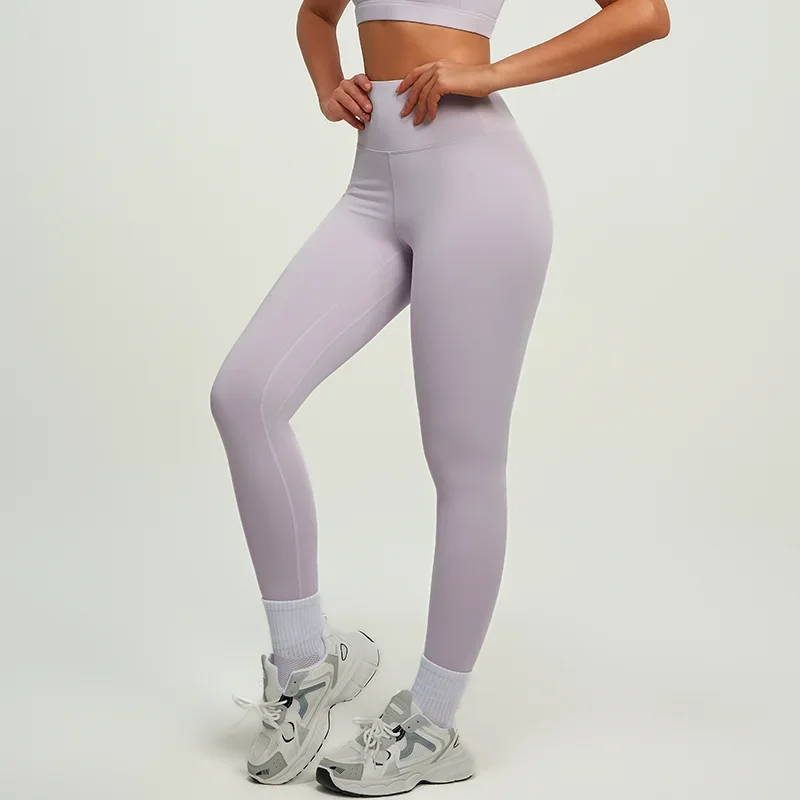
Women’s workout leggings involve more than waist and hip measurements. We review front and back rise, waistband stability, seat shaping, thigh compression, knee mobility, ankle opening, inseam, and seam placement so the fit standard reflects movement as well as static dimensions.
The waistband is especially important because it anchors the garment during bending and training. A high rise can provide coverage, but excessive tension may feel restrictive, while insufficient recovery can lead to rolling or slipping. We assess the waistband against the body fabric and construction so it supports the intended fit rather than correcting a weak pattern.
Seat and hip shaping also influence comfort and appearance. Contoured seams or shaping panels can support a close fit, but they need to follow body movement without pulling the waistband out of position. We translate fitting comments from the approved sample into pattern adjustments before size grading.
Grading carries the fit into smaller and larger sizes. We do not assume that every point increases at the same rate; rise, waistband, leg opening, and length may need different rules to preserve the original silhouette. A clear measurement table gives production and inspection teams the same target across the size range.
Opacity is tested while the garment is stretched, particularly in lighter colors and high-flex zones. The result depends on fabric, color, pattern tension, and fit, so an acceptable swatch alone does not guarantee acceptable coverage on the finished legging.
Choose Fabric for Recovery, Comfort, and Surface Performance
Fabric selection changes the character of the same pattern. Nylon-spandex and polyester-spandex blends can be adjusted for different hand feel and performance goals, while seamless, brushed, ribbed, and sustainability-oriented materials introduce their own texture and stretch behavior. We compare options against the use case rather than ranking one fiber universally above another.
The MT20 gives our Joebond team a useful reference for stretchy, skin-friendly fabric, a smooth close fit, and high-waisted shaping. We use references like this to discuss hand feel, recovery, waist behavior, and silhouette with buyers, while final material and size decisions remain tied to the specific program being developed.
Recovery is critical because leggings remain under repeated extension during wear. Material that stretches easily but returns slowly can bag at the knees, seat, or waistband, so our evaluation includes repeated movement and handling rather than a single short fitting.
Surface finish affects both appearance and downstream branding. Brushed fabric feels different from a smooth technical knit, while ribs can change the visual line of seams and prints. Planned logos, labels, or printed graphics are tested on the same material selected for production.
Color approval is completed on the selected fabric. Different shades can reveal opacity, sheen, or surface irregularity in different ways, and dyeing can affect hand feel. We use production-intent samples to reduce the chance that a colorway behaves differently from the reference that established the fit.
For buyers building several legging colors around one core fit, material continuity becomes part of assortment control. We compare stretch, recovery, weight, and surface behavior across approved shades so a new color does not quietly turn the same pattern into a noticeably different wearing experience.
Preserve the Approved Fit Through Production and Reorders
Bulk production requires the approved custom yoga leggings specification to remain visible through cutting, sewing, inspection, and packing. We compare key measurements, seam quality, fabric appearance, waistband behavior, and artwork against the approved standard rather than relying on a final visual check alone.
For repeat women’s workout leggings, the approved pattern, grading, fabric reference, color, logo, labels, and packaging provide a stable manufacturing baseline. A one-variable change can be isolated for review while our team leaves the established fit and construction untouched.
Material availability also matters at scale. A sample may use a textile that is easy to obtain in a small quantity, but a commercial order needs a supply plan that can support the full run and potential replenishment. We discuss that reality before final approval so substitutions do not appear unexpectedly during production.
Our Joebond workflow connects material selection, sample confirmation, manufacturing, quality checks, and packing within one activewear supply chain. This continuity allows fit decisions to stay aligned with delivery planning, reducing the handoff risk that appears when development and order execution are managed separately.
A useful fit-and-fabric program converts subjective preferences into production targets. Once movement, recovery, coverage, measurements, material references, and inspection limits are agreed, our team can scale the legging with a clearer standard for both the first order and future volume.