Cropped long-sleeve tops can add training function, layering, and fashion direction to the same activewear range. Our development process separates the visual trend from the manufacturing decisions behind it, allowing silhouette ideas to evolve while fit, material behavior, timing, and repeatability stay controlled.
For custom long sleeve shirts, the key questions include crop length, sleeve proportion, neckline, back treatment, closure, stretch level, layering intent, and target size range. Defining those points early gives the development team a usable specification and makes it easier to compare variations without turning every new silhouette into a completely separate process.
Build a Trend Direction From Wearable Silhouettes
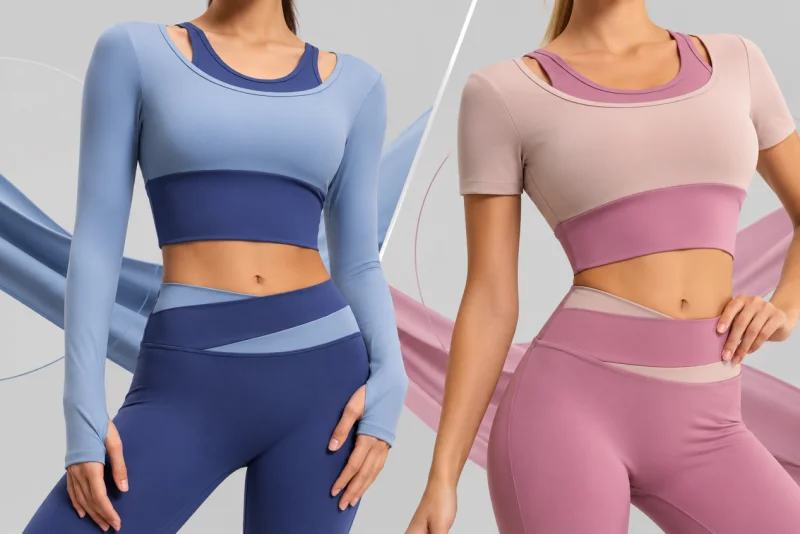
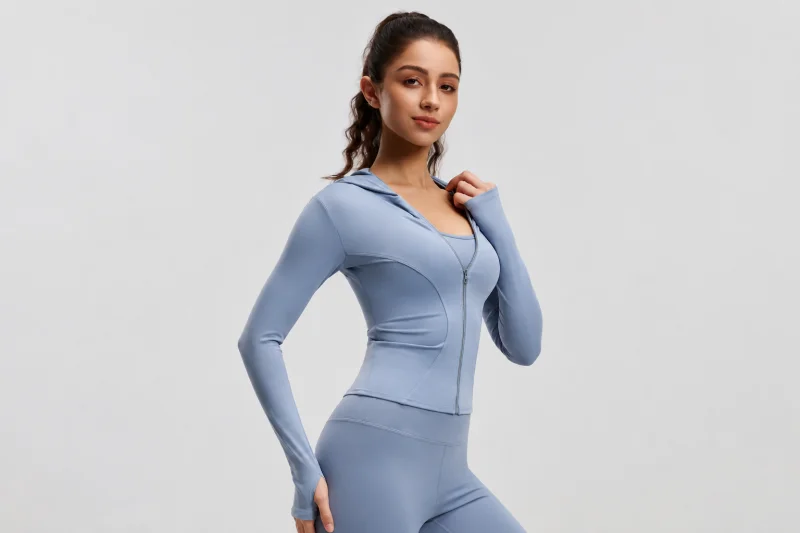
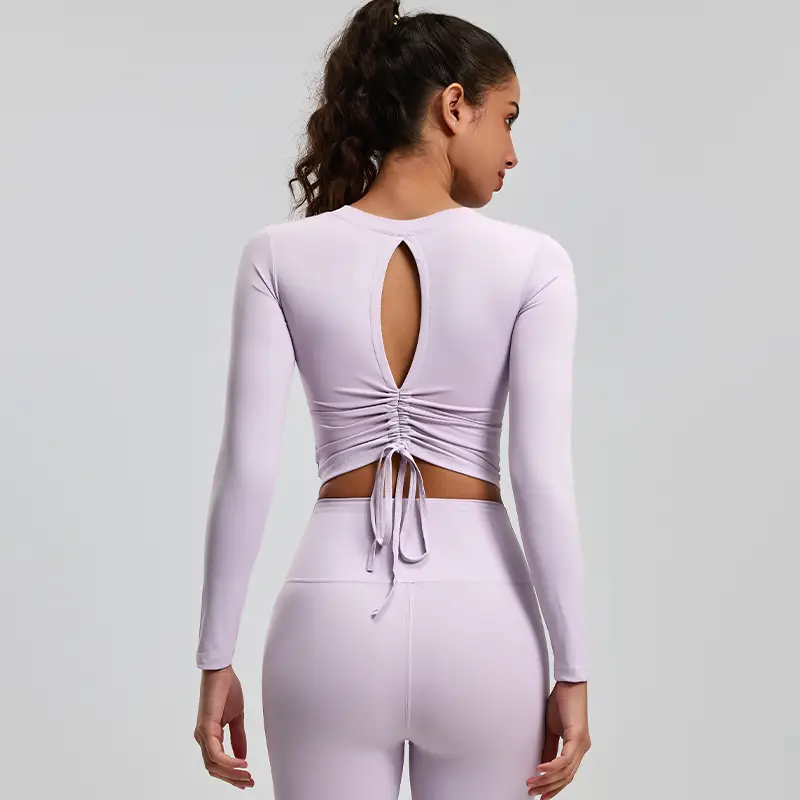
Long sleeve yoga crop tops can differ substantially even when the overall category name is the same. Seamed crops, half-zip constructions, ruched backs, hollow-out details, ribbed fabrics, V-necks, cross-back shapes, layered looks, and relaxed versions each change how the garment sits and how it pairs with leggings, skirts, or pants.
Before selecting details, we ask the buyer to assign a clear role to each style. A close-fitting studio top may prioritize stretch recovery and secure coverage, while a looser layering piece can allow more ease and a softer drape. A half-zip version introduces hardware and collar structure that need different fitting checks from a simple crew-neck crop.
Crop length is especially sensitive to body proportion and waistband height. We compare the top against the intended bottoms so the collection has a deliberate amount of overlap or exposed waist rather than a gap created by unrelated measurements. This coordination can also make lookbook and retail styling more consistent.
Back details can become the strongest visual feature, but they still need to function during movement. Drawstrings, openings, cross-back elements, and layered panels must avoid excessive tension or unwanted exposure. We verify those features on a sample instead of assuming that a sketch will translate directly to active use.
A focused assortment usually works better than a collection of near-duplicates. We can help a buyer assign one silhouette to core training, another to fashion-led coordination, and a third to layering, then use shared colors or fabrics to connect the group.
Translate the Silhouette Into a Production-Ready Specification
Pattern development turns the visual idea into measurable construction. Sleeve length, bicep ease, cuff opening, body width, crop point, neckline, shoulder balance, and back details all need numerical control. We use fitting comments to refine these areas before grading the approved size across the range.
Our long-sleeve work under Joebond covers multiple cropped and full-length constructions, and we can develop patterns from design sketches and fabric requirements. That gives buyers room to keep a consistent brand fit while varying necklines, closures, back treatments, and surface details across a seasonal group.
Fabric selection needs to follow the silhouette. A highly elastic fitted crop depends on recovery and opacity, whereas a looser top may need drape and surface softness. Ribbed or brushed materials add texture but can also change stretch and shrinkage behavior, so the final textile is approved against the pattern rather than after it.
Branding should respect the same movement map. A logo on a fitted torso or sleeve can experience more extension than one placed on a relaxed panel. We test printing, embroidery, labels, or other treatments on the intended material so decoration does not undermine comfort or recovery.
The technical file also carries color, trim, label, hangtag, and packing requirements. Consolidating those instructions gives merchandising and production teams one approved version to work from and reduces small inconsistencies when several related styles enter production in the same program.
Plan Sourcing Around Reorders and Collection Timing
Fashion direction matters only if the supply plan can support the launch. We schedule sampling, revisions, material confirmation, bulk production, inspection, and packing around the date the collection needs to reach the buyer. Faster decisions on fit and materials usually create more useful time than asking production to absorb unresolved development later.
When custom long sleeve shirts are intended as repeat core pieces, we archive the approved grading, pattern, textile reference, and artwork so future colorways can start from an established standard. Seasonal styles can use a lighter reorder expectation, but they still benefit from clear records if a strong seller needs replenishment.
For a group of long sleeve yoga crop tops, shared materials or coordinated colors can simplify sourcing while preserving visual variety. The buyer does not need every style to use identical fabric, yet reducing unnecessary material fragmentation can make color control, purchasing, and production planning more efficient.
Commercial timing should also account for trim and packaging readiness. A finished top cannot ship as a complete branded SKU if labels, hangtags, barcodes, or retail packing are still unresolved, so we place those items on the sourcing calendar rather than treating them as work that begins after sewing.
With Joebond, we can combine developed crop-top programs with broader activewear manufacturing and ready-stock resources. This gives the buyer options when a launch needs signature custom pieces, faster supporting styles, or a deliberate mix of both.
A commercially useful trend piece has to survive the move from concept to supply. Measurable fit, appropriate textile behavior, sample approval, trim readiness, and realistic production timing turn a fashionable crop top into a style that can sit reliably inside a larger collection.