NEWS

Stay updated with our latest news, industry insights, and company developments.

10 Best Custom Yoga Sports Bra Manufacturers Worldwide

The global yoga and athleisure market continues to expand as consumers look for activewear that combines performance, comfort, and everyday style. Among different product categories, the yoga sports bra has become a key SKU for activewear brands because it combines functional performance with strong design potential. This guide introduces 10 reliable yoga sports bra manufacturers that provide OEM/ODM solutions for brands, retailers, and startups looking to develop custom yoga apparel collections.     Future Trends in Yoga Bra Manufacturing and Business Opportunities The growing athleisure market is increasing demand for apparel that combines performance, comfort, and everyday styling. According to industry reports, the global yoga apparel market is projected to reach $ 66.34 billion by 2034, with a CAGR of 8.57%. For manufacturers, this growth creates opportunities in customized yoga apparel, especially products such as leggings, tops, and yoga bras. The Major Trends in Yoga Bra Manufacturing: Growing Demand for Customized Activewear: Brands increasingly prefer custom sports bra programs to create differentiated collections instead of relying on standard catalog products. Sustainable Fabric Adoption: More brands are exploring recycled and eco-friendly materials that balance stretch recovery, comfort, durability, and color stability. Functional Design Innovation:  Yoga bra development is moving toward seamless construction, versatile designs, improved support,

Read More »

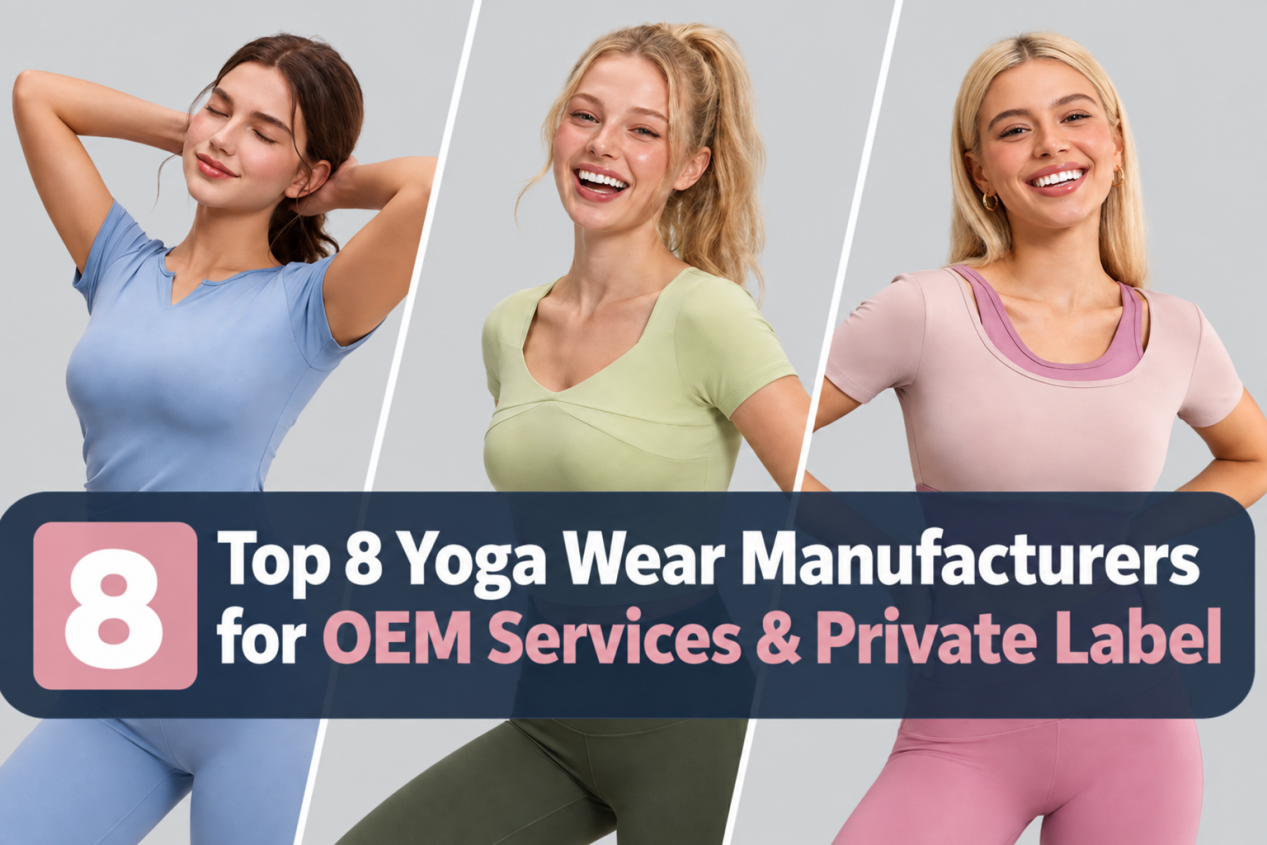
Top 8 Custom Yoga Wear Manufacturers in 2026-2027

Choosing the right supply chain partner determines whether an activewear brand scales efficiently or struggles with quality issues. Private-label brands and activewear start-ups must evaluate production speeds, minimum order quantities (MOQs), fabric innovation, and custom capabilities to stay competitive. This guide reviews the eight custom yoga wear manufacturers for 2026–2027 to help you select the ideal manufacturing partner.       Why Choosing the Right Yoga Wear Manufacturers Matters Selecting a manufacturing partner directly impacts your product performance, operational margin, and brand credibility. The activewear sector demands technical precision that standard apparel factories cannot deliver. 1. Fit and Fabric Performance Shape Product Quality Yoga apparel requires high opacity, four-way stretch, sweat-wicking properties, and flatlock seams. If a fabric sheer-tests poorly under tension or loses elasticity after washing, customer returns increase rapidly. Specialized manufacturers maintain strict textile testing protocols to guarantee consistent compression and durability. 2. MOQ and Production Flexibility Affect Cash Flow A high minimum order quantity can create unnecessary inventory risk for a new brand. Established brands need suppliers that can scale to hundreds of thousands of units per month. Partnering with a flexible yoga fitness wear manufacturer allows you to scale order sizes seamlessly as demand grows. 3. Speed to Market Is a

Read More »

How to Build a Custom Yoga Apparel Collection?

A custom activewear collection needs a commercial architecture before it needs a long list of SKUs. Our planning connects target customer, price position, color story, fit, fabric, size range, branding, launch timing, and inventory role across categories so individual garments can share a recognizable standard without becoming copies of one another.   For custom yoga clothing, we first identify the products that should carry continuity and the products that can carry seasonal change. Leggings, bras, tops, jackets, pants, and skirts are then assigned roles in the range, allowing fit, color, development effort, and supply timing to be coordinated around how the collection is expected to sell.   Create a Collection Architecture Before Developing Every SKU Private label yoga clothing becomes easier to manage when each style has a defined commercial role. A core legging may be designed for repeat replenishment, a bra can complete the training set, a jacket can add layering value, and seasonal tops or skirts can introduce new silhouettes without changing the entire fit system.   Shared decisions are established only where they add value. Size conventions, brand colors, logo rules, labels, packaging, and selected fabric families can serve several garments, while product-specific construction remains free to follow

Read More »

How to Design Custom Training Jackets for Fitness Collections?

A training jacket earns its place in a fitness collection when its proportions, function, and color work with the layers around it. Our design process begins with those assortment relationships, using intended base layers and bottoms to define length, collar, sleeve shape, zipper construction, fabric weight, stretch, and visual balance.   The brief for custom sports jackets combines garment performance with a clear assortment role. A fitted warm-up layer may need close recovery and a shaped waist, while a travel or lifestyle jacket can use more ease and drape; setting that role early keeps sample revisions focused on the customer the collection is built for.   Build the Jacket Around Layering and Movement A program built around sports jacket wholesale benefits from a clear layering standard because the same outer piece may be worn over several tops. We establish the expected underlayer, then review chest ease, armhole comfort, shoulder movement, sleeve width, and body length so the jacket does not become restrictive when the collection is layered in use.   Collar and zipper construction influence both appearance and use. A stand collar can create a clean athletic line, but its height and circumference need to remain comfortable when fully closed. The zipper

Read More »

Yoga Leggings for Women: Fit and Fabric Guide

Small fit or fabric changes can transform the wearing experience of leggings. Our fitting process checks waistband height, rise, hip shaping, inseam, seam position, opacity, and recovery in the production-intent textile, because a pattern approved in one material can behave differently when stretch, weight, or surface finish changes.   The sourcing brief for custom yoga leggings starts by fixing the use case and fit profile. A soft studio legging, a firmer training style, and a compression-oriented bottom can use different material and pattern targets even when all three share a high-waisted silhouette.   Define Fit Through Movement, Not a Size Label Alone Women’s workout leggings involve more than waist and hip measurements. We review front and back rise, waistband stability, seat shaping, thigh compression, knee mobility, ankle opening, inseam, and seam placement so the fit standard reflects movement as well as static dimensions.   The waistband is especially important because it anchors the garment during bending and training. A high rise can provide coverage, but excessive tension may feel restrictive, while insufficient recovery can lead to rolling or slipping. We assess the waistband against the body fabric and construction so it supports the intended fit rather than correcting a weak pattern.  

Read More »

Custom Yoga Pants with Logo: Fabric and Printing Options

Our logo workflow for performance bottoms begins before artwork placement is finalized. Stretch zones, waistband construction, fabric texture, heat sensitivity, seams, and abrasion points are mapped during development so the branding method can be built into the garment instead of added after the technical decisions have already been made.   Fabric selection for custom yoga pants establishes the surface and stretch conditions the logo must survive. Nylon-spandex, polyester-spandex, seamless, brushed, ribbed, and other performance constructions can respond differently to print films, embroidery, labels, heat, and repeated extension, so our material and branding teams evaluate them within the same sample cycle.   Select Fabric Before Selecting the Logo Process During development of custom yoga pants with logo, our team maps high-stretch and high-friction zones before fixing the artwork coordinates. A waistband mark, thigh graphic, or lower-leg logo faces different mechanical loads, and that garment map guides both placement and decoration method.   Smooth surfaces can support crisp graphics, while ribbed or brushed textiles can alter edge definition and adhesion. We test the actual fabric to confirm stretch response, heat tolerance, and surface compatibility before a branding process is approved for the style.   Garment color and artwork are approved in the same

Read More »