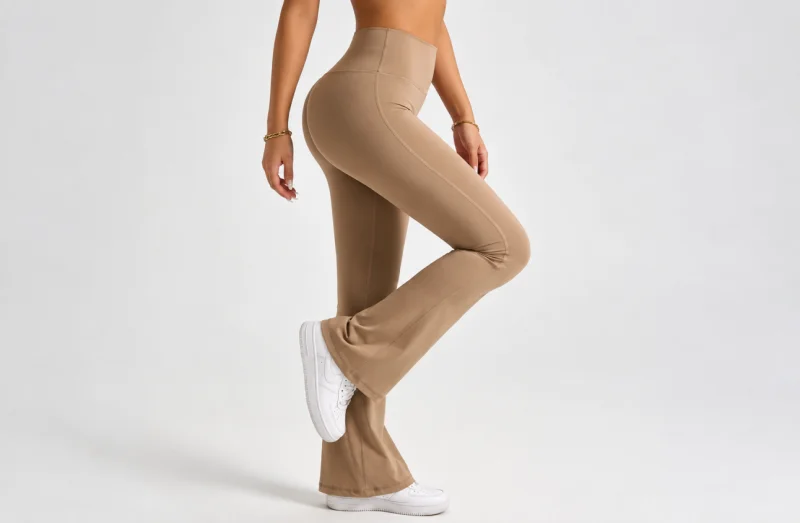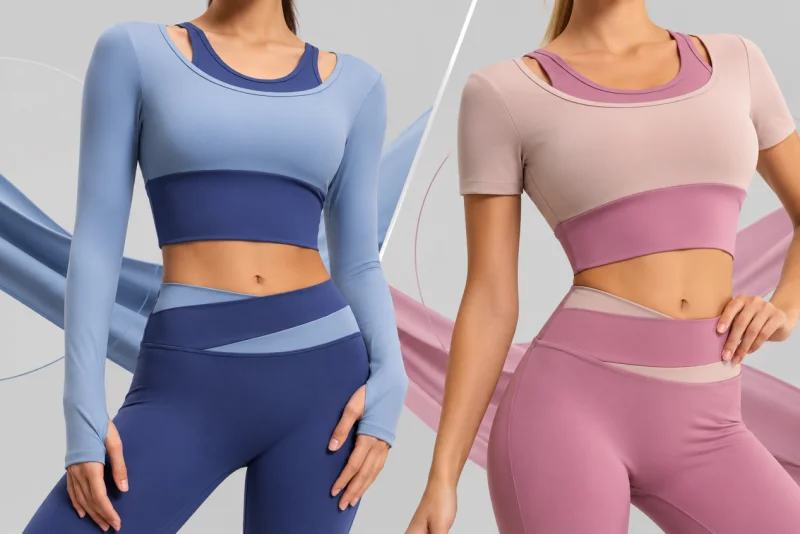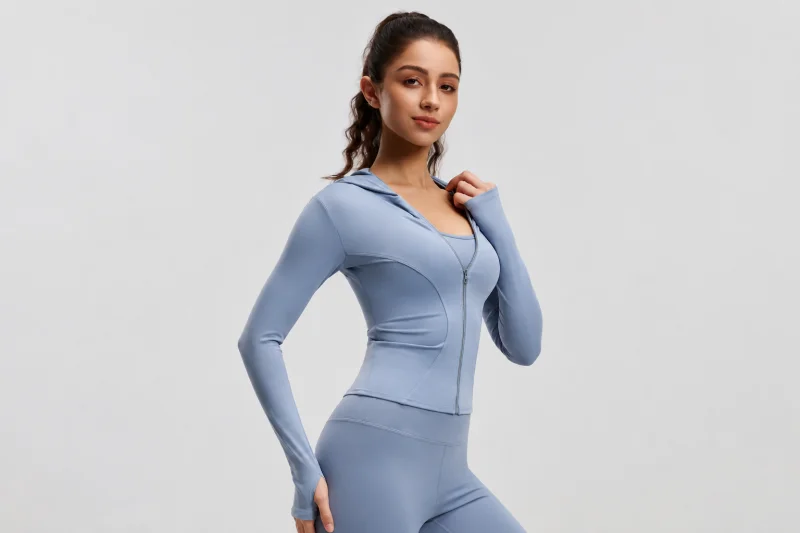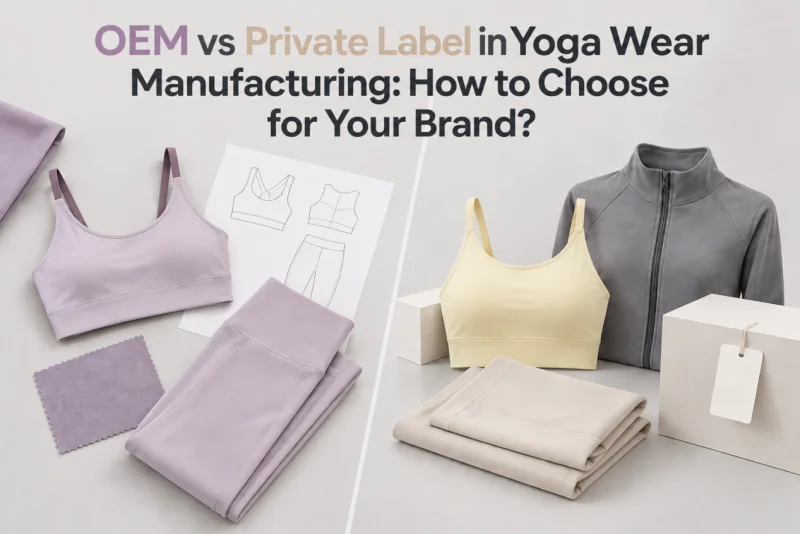
Our logo workflow for performance bottoms begins before artwork placement is finalized. Stretch zones, waistband construction, fabric texture, heat sensitivity, seams, and abrasion points are mapped during development so the branding method can be built into the garment instead of added after the technical decisions have already been made.
Fabric selection for custom yoga pants establishes the surface and stretch conditions the logo must survive. Nylon-spandex, polyester-spandex, seamless, brushed, ribbed, and other performance constructions can respond differently to print films, embroidery, labels, heat, and repeated extension, so our material and branding teams evaluate them within the same sample cycle.
Select Fabric Before Selecting the Logo Process
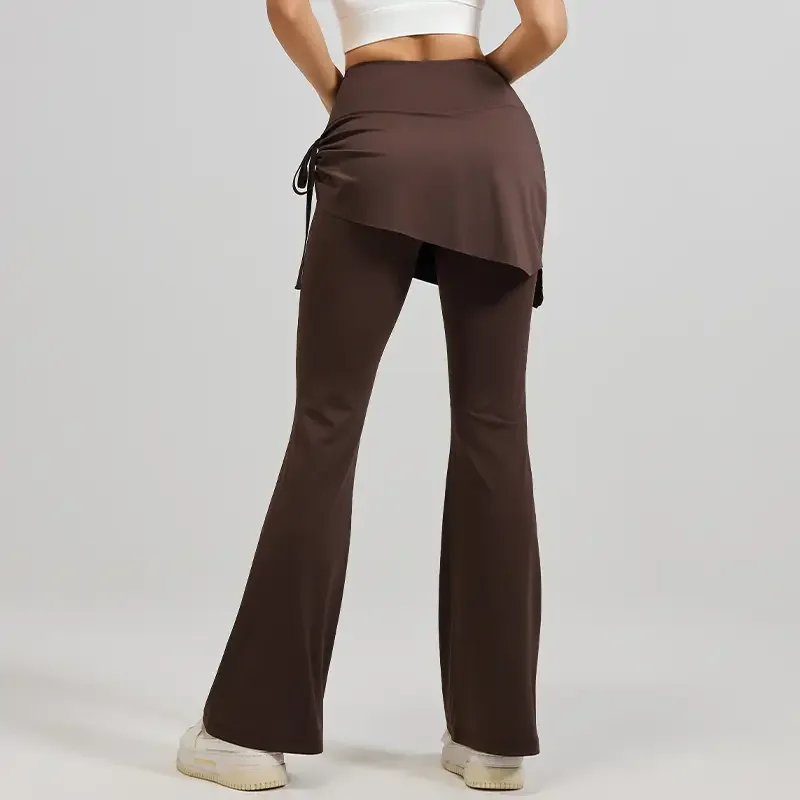
During development of custom yoga pants with logo, our team maps high-stretch and high-friction zones before fixing the artwork coordinates. A waistband mark, thigh graphic, or lower-leg logo faces different mechanical loads, and that garment map guides both placement and decoration method.
Smooth surfaces can support crisp graphics, while ribbed or brushed textiles can alter edge definition and adhesion. We test the actual fabric to confirm stretch response, heat tolerance, and surface compatibility before a branding process is approved for the style.
Garment color and artwork are approved in the same sample review. Pale bottoms need closer opacity checks under stretch, while high-contrast graphics make small registration or surface issues easier to see; linking these decisions gives bulk production a realistic finished target.
Construction provides natural placement zones. Waistbands, side panels, back yokes, and lower legs can carry different visual weight and mechanical stress. We review seam allowances and panel shapes before setting the final artwork coordinates, reducing the risk that a logo shifts too close to stitching during grading.
If a collection uses several bottom silhouettes, one branding system can still be maintained by defining placement principles rather than forcing one fixed coordinate onto every pattern. This keeps the identity consistent while respecting differences between leggings, joggers, flared pants, or compression styles.
Compare Printing and Branding Through Sampling
Printing is only one route. Depending on the design and fabric, we can consider heat-transfer applications, other printed treatments, embroidery, woven labels, hangtags, and customized packaging. The best method balances visual effect, flexibility, production repeatability, and the level of detail the artwork requires.
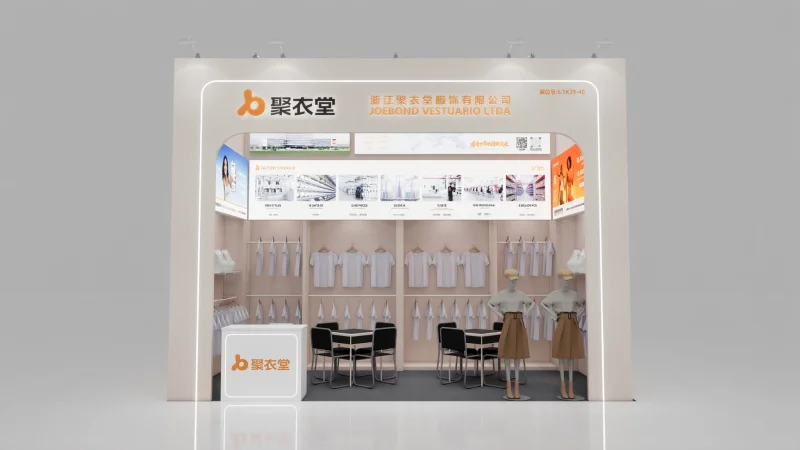
Within Joebond, we connect fabric selection, pattern development, sample approval, branding, bulk production, and final inspection in one workflow. The buyer sees the logo on the complete garment while our production team verifies that the chosen method can be repeated at the required scale.
Sample review includes more than whether the logo looks correct while flat. We stretch the relevant area, examine edge behavior, check whether the fabric puckers, and confirm that the application does not create uncomfortable stiffness. Wash and handling expectations can also be included when the branding method needs additional verification.
Embroidery can deliver a tactile premium effect but adds thread, needle penetration, and local stiffness. A woven label behaves as a separate component and needs comfortable edge placement. Printed methods can support larger graphics, yet they must be compatible with the surface and elasticity of the selected textile.
Artwork control is set before the bulk run begins. The approved file, dimensions, color reference, and placement measurement are assigned to the garment specification so operators and inspectors share one target and later colorways can be compared without recreating the graphic setup.
Protect the Approved Fabric-Logo Standard in Bulk
Bulk production of custom yoga pants keeps material and branding checks linked. If the fabric lot changes in hand feel or stretch, the logo may also behave differently even when the artwork and machine settings are unchanged. We verify incoming materials before relying on the original decoration result.
A repeat order for custom yoga pants with logo can use the approved pattern, grading, fabric, artwork, and packaging as a baseline. When only color or size ratio changes, the production team can focus on those variables rather than reopening every technical decision from the first order.
Production inspections cover measurements, stitching, surface appearance, logo position, and packing at defined stages. Those checkpoints allow our team to correct gradual drift – such as artwork moving relative to a seam or waistband – before it spreads across the full batch.
For multi-color programs, we also separate artwork approval from colorway approval. The same logo file can require different contrast, curing, or placement checks when the base material changes, so each production color is tied back to the approved visual standard before packing begins.
Joebond gives us a connected activewear supply chain around the branding work, including material coordination, sampling, manufacturing, labels, hangtags, and packaging. Buyers building several branded bottoms can coordinate one visual system with one production and delivery plan instead of splitting responsibility across separate decoration and garment vendors.
The strongest fabric-and-printing option is the one our production line can reproduce consistently after the sample is approved. Proving textile behavior, placement, decoration method, fit, and inspection limits before volume begins gives the buyer a more dependable route from artwork to finished wholesale goods.