We plan activewear logo branding as part of manufacturing from the first sample. Placement, scale, fabric stretch, heat exposure, stitch density, and washing conditions all influence durability, so our branding decisions are developed alongside fit and fabric instead of being attached after the shirt is technically finished.
For custom short sleeve shirts, our team begins with silhouette, textile behavior, neckline, body length, seam construction, and intended use, then matches the logo process to those conditions. This integrated approach lets printing, embroidery, labels, and packaging move through sampling and bulk production under the same control points as the garment itself.
Choose Placement From the Garment, Not From a Flat Mockup
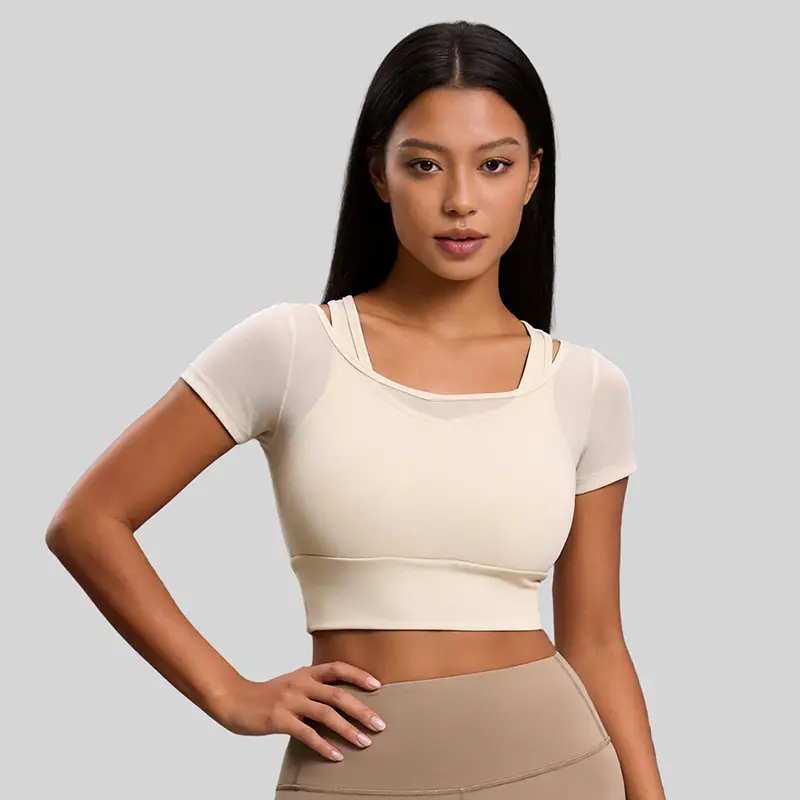
A yoga top short sleeve stretches and moves differently across the chest, shoulder, sleeve, and hem, so a logo that appears centered on a flat drawing may shift when the top is worn. We review the artwork on the actual pattern and sample to judge its position in relation to seams, neckline, body proportions, and movement zones.
Mechanical stress varies by logo location. A small chest mark may extend less than a wide torso graphic, while sleeve branding sits closer to curved seams. Our team evaluates those conditions to determine the most suitable location and application method for the buyer’s brand, protecting both appearance and fabric movement.
Brand scale needs to match the garment size range. A fixed-size logo can look very different on the smallest and largest sizes, especially on fitted activewear. We check whether one artwork size is acceptable across the range or whether placement rules need to reference garment measurements instead of a single visual estimate.
Color contrast should be tested on production-intent fabric. Stretch can lighten some textiles and alter the visual relationship between the base color and printed artwork. For pale or highly saturated shades, we confirm the finished effect on a sample so the brand color does not rely on a screen preview alone.
Care labels, size marks, hangtags, and retail packaging are part of the same identity system. We coordinate these elements with the visible logo so the garment carries consistent naming, artwork, and information from sewing through final packing.
Match the Branding Method to Fabric and Order Requirements
Each decoration route brings a different production profile. Heat-transfer graphics can remain light and clean, embroidery adds texture and thread density, woven labels create a separate branded component, and other printing methods can support larger artwork. We match the method to the fabric, visual target, expected wear, quantity, and required turnaround.
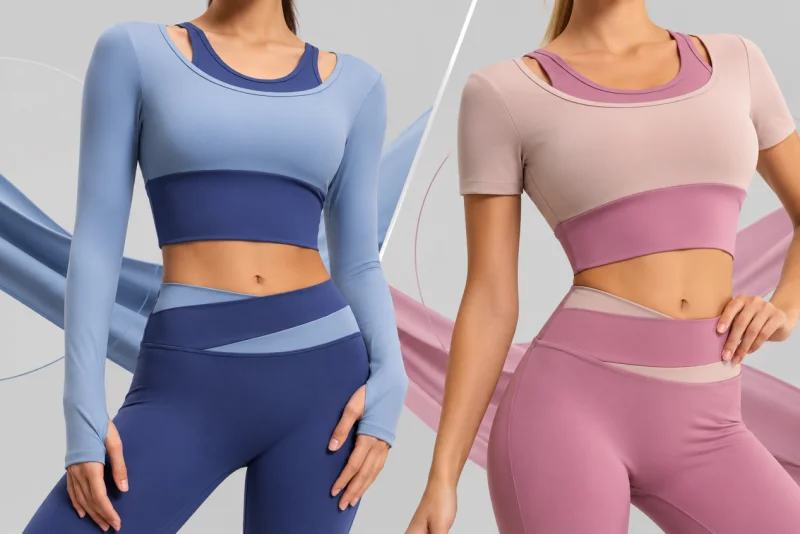
Across Joebond‘s short-sleeve program, we produce slim, loose, mesh, cropped, raglan, color-block, cutout, and training-oriented constructions. Because decoration stays inside the same development flow, our team can test logo scale, placement, and process on the exact fabric and panel layout that will enter production.
A slim performance tee, for example, may place more stretch across the torso than a relaxed top. Embroidery density that feels acceptable on a stable panel can become rigid on a highly elastic area. We balance stitch or print coverage with flexibility so branding remains readable without creating an uncomfortable patch.
Order quantity also influences the most practical route. Detailed setup can make sense for a repeat private-label program, while a small market test may benefit from a simpler application that keeps development efficient. We discuss artwork complexity, sample time, production quantity, and future reorder plans before the method is locked.
Packaging and hangtags can carry additional brand information when the garment itself needs minimal decoration. That option can preserve a clean athletic look while still giving the buyer room for barcodes, collection naming, care communication, and retail presentation.
Approve Branding as Part of the Production Standard
The approval sample is reviewed as a finished branded garment. Our team checks artwork position, scale, color, edge quality, adhesion or stitch security, fabric distortion, fit, and workmanship in one inspection, creating a direct benchmark for bulk production.
Artwork version control is equally important when several colorways are active. We assign the approved file, dimensions, and placement note to the relevant style so an older logo scale or superseded graphic is less likely to reappear when the order moves from sampling to production.
When custom short sleeve shirts return for another order, the approved artwork and placement dimensions remain attached to the garment specification alongside fabric, pattern, grading, and color. This allows a new size ratio or colorway to move forward without turning logo setup into a separate redevelopment exercise.
Our production team also checks branding during the run rather than waiting until packing. When a logo, label, or print begins to drift from the approved position, earlier detection gives more room to correct the process before a large quantity is completed.
A second yoga top short sleeve colorway can use the same artwork while requiring different contrast, heat, or surface settings. Each new fabric-and-color combination receives its own production confirmation so the visual identity remains consistent even when the base textile changes.
Joebond’s integrated short-sleeve workflow lets us connect sample development, logo application, inspection, and customized packaging. The practical result for the buyer is a branded top whose artwork is controlled with the same discipline as fit, fabric, and delivery, supporting both consistent bulk output and faster repeat programs.