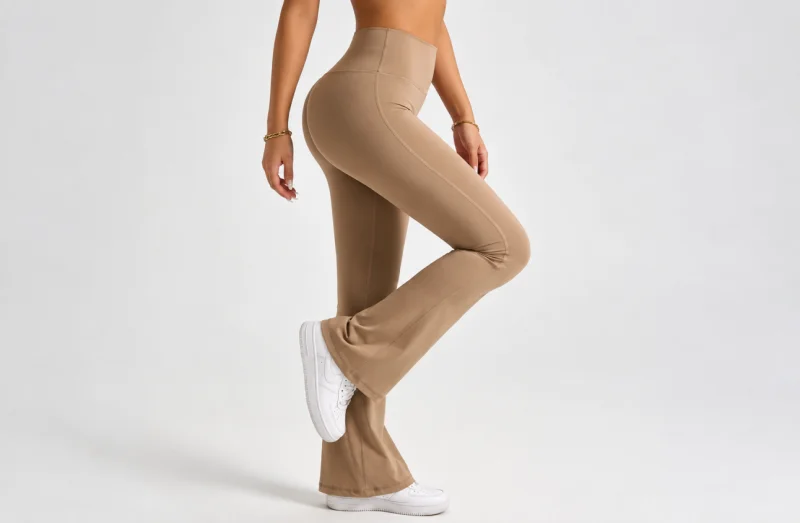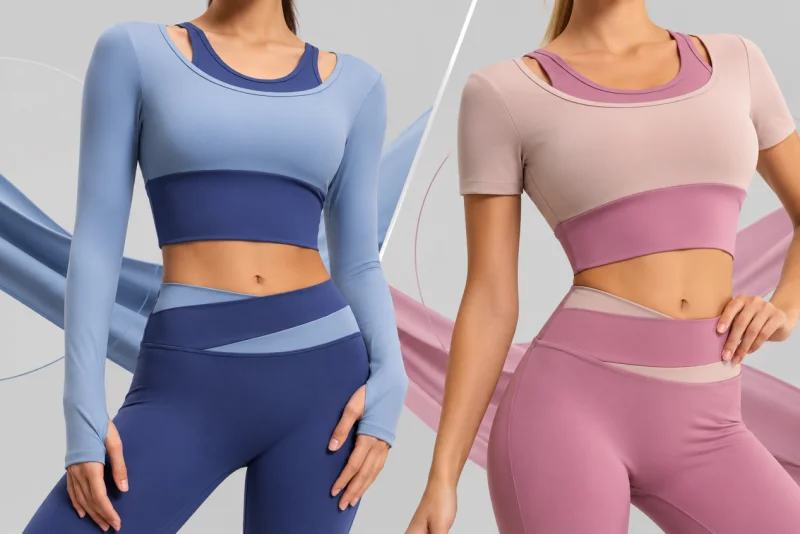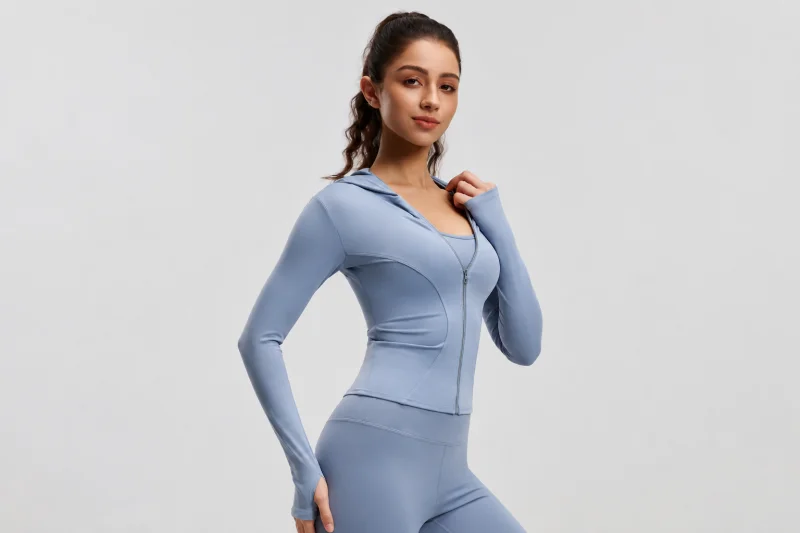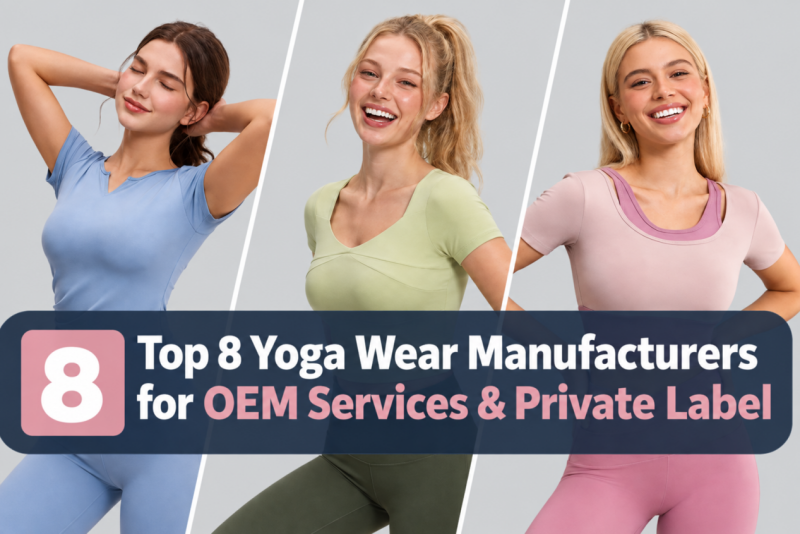
Selecting the right production model is one of the most critical supply chain decisions for activewear startups and expanding apparel brands alike. Grand View Research estimates the global yoga clothing market at USD 56.6 billion in 2026, creating major commercial opportunities alongside heightened market competition.
Choosing between OEM and private label manufacturing affects more than unit costs—it shapes product differentiation, development workload, launch speed, inventory risk, and intellectual property control. This guide breaks down the core distinctions, development workflows, and decision frameworks to help you choose the ideal manufacturing strategy.
What Is OEM Yoga Wear Manufacturing?
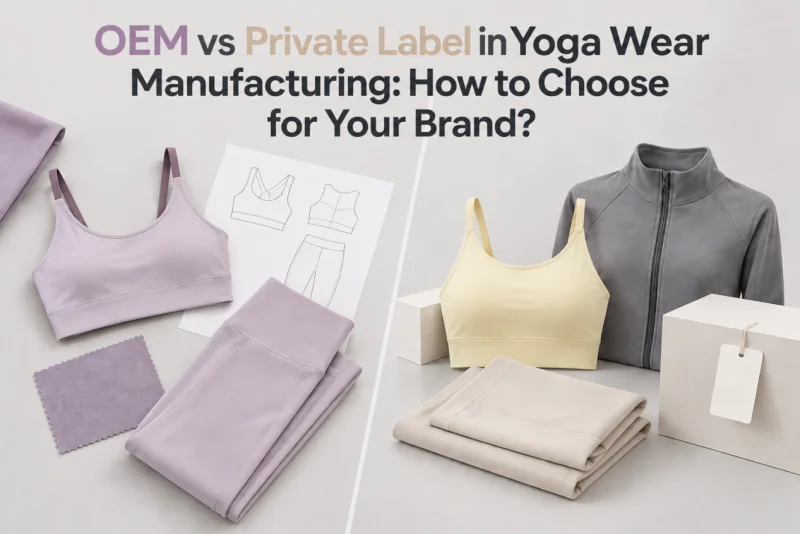
Original Equipment Manufacturing (OEM) in activewear generally refers to a production model in which a manufacturer produces garments according to a brand’s product specifications. Depending on the supplier and development scope, the brand may provide a tech pack, design sketches, measurement specifications, fabric requirements, or a physical reference sample. The manufacturer then translates these inputs into samples and finished activewear products.
Core Benefits of OEM:
- Total Design & Fit Control:You can define key garment details, from seam placement and waistband height to fit, compression level, and gusset construction.
- Stronger Product Differentiation:Custom-developed silhouettes, fit specifications, construction details, and material choices can help create products that are more differentiated than standard catalog styles.
- Greater Control Over Brand-Specific Design Assets:OEM gives brands greater control over original product development. However, ownership and legal protection of designs, tech packs, and other intellectual property should be clearly defined in agreements and handled according to applicable IP laws.
Typical OEM Trade-Offs:
- Higher Minimum Order Quantities (MOQs):Custom fabric knitting and dye lots usually require larger fabric runs per style and colorway.
- Longer Development Lead Times:Prototyping, pattern grading, fit revisions, and lab-dip color approvals add weeks or months before bulk production starts.
- Upfront R&D Investment: Brands must fund tech pack creation, multiple sampling rounds, and wear-testing procedures.
What Is Private Label Yoga Wear Manufacturing?
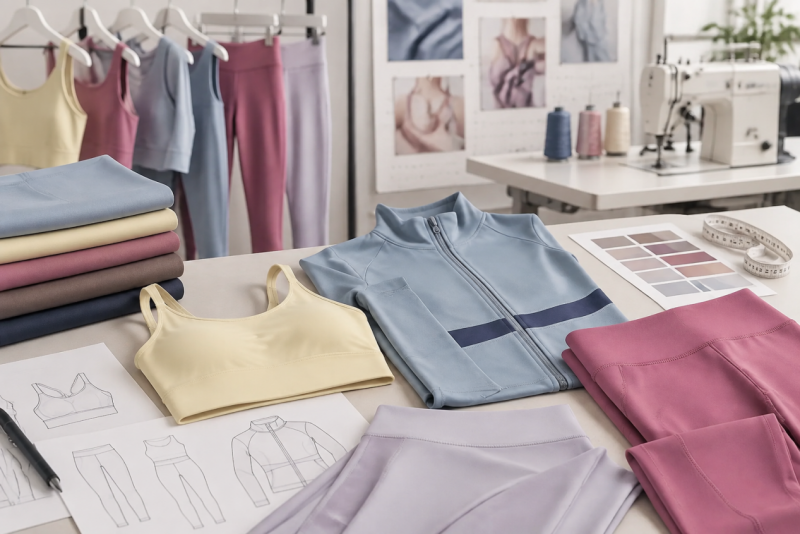
Private label yoga clothing is a production model where a manufacturer designs and produces ready-made garments, allowing brands to apply their own branding elements. Instead of building a design from scratch, the brand selects established silhouettes from the manufacturer’s catalog and adds custom finishing touches.
Core Benefits of Private Label:
- Accelerated Time-to-Market:Skip months of pattern creation and sample revisions. Products can move from catalog selection to retail shelf in weeks.
- Lower Upfront Capital Risk:Reduce the need for full tech pack development, pattern creation, and extensive sampling rounds. More capital can remain available for branding, marketing, and customer acquisition.
- Flexible Minimum Order Quantities:Manufacturers may be able to offer lower MOQs by using in-stock fabrics and established patterns.
Typical Trade-Offs of Private Label:
- Limited Design Adjustments:Core construction changes are usually more limited than with full OEM development. Available modifications to seams, pockets, panels, fit, or other details depend on the supplier and program.
- Shared Market Silhouettes:Competitors sourcing from the same supplier may carry garments with identical fits and seam lines under different brand logos.
- Reduced Fabric Exclusivity: Light private-label programs often rely on the manufacturer’s available or in-stock fabrics, which can provide less material flexibility than a fully customized OEM project.
OEM vs Private Label Yoga Wear Manufacturing: Key Differences
Understanding the structural differences between OEM and private label models helps prevent misaligned budgets and unrealistic launch timelines.
| Feature | OEM Manufacturing | Private Label Manufacturing |
| Starting Point | Custom Tech Pack, sketch, or physical reference sample | Pre-developed factory catalog styles |
| Product Control | Full control over fabrics, fit, seams, trims, and performance | Restricted to custom logos, labels, tags, and packaging |
| Development Requirement | High (pattern making, grading, fit testing, sample revisions) | Low (selecting styles, uploading logo art, approving proof) |
| Time-to-Market | Usually longer due to product development, sampling, fit approval, and material preparation. | Usually shorter when existing styles, patterns, and available materials are used. |
| Exclusivity | High (proprietary designs owned entirely by the brand) | Low (silhouettes available to other market brands) |
| Typical Use Case | Established brands with distinct designs and custom fabric specs | Startups, fitness influencers, and rapid catalog expansions |
Cost and lead time should still be quoted project by project. Private label is not automatically “cheap,” especially when premium fabrics, complex decoration, custom packaging, or small quantities are involved. OEM is not automatically “expensive” either; a technically straightforward custom style can still be commercially practical.
The same caution applies to MOQ. Minimum order quantities can change with fabric availability, dyeing requirements, style complexity, color count, branding method, and whether the product is made from ready stock or developed from scratch.
How to Choose Between OEM and Private Label for Your Brand
1. Choose Based on What Your Brand Already Has
Start with your current level of product readiness. If you already have tech packs, tested measurements, fabric requirements, and a clear fit standard, OEM gives the factory a detailed development target. If your team has a brand concept but limited technical apparel-development resources, private label may be more efficient.
2. Decide How Important Product Differentiation Is
OEM is generally the stronger route when the garment itself is central to your positioning. A signature waistband, specific pocket structure, distinctive seam layout, proprietary fit standard, or carefully selected fabric may require full development. Private label can still create a coherent brand presentation through color, logos, labels, hangtags, packaging, and coordinated product selection.
3. Consider Launch Speed and Product Validation
Private label is often useful when the priority is learning quickly. OEM becomes more valuable once the brand knows which products deserve deeper development. A practical hybrid strategy is to use private label for faster validation and supporting products, then invest in OEM for hero products where fit, performance, or design differentiation matters most.
4. Match the Model to Your Order and Inventory Strategy
A new brand with uncertain demand may prefer smaller tests and a narrower SKU count. A mature brand with stable forecasts may be more comfortable investing in custom development and larger production runs.
5. Evaluate the Manufacturer, Not Just the Manufacturing Model
Evaluating a supply chain partner goes beyond deciding between OEM and private label. The most adaptable supply chain partners offer dual capabilities, supporting both catalog branding for quick rollouts and deep OEM development for custom product lines.
Manufacturers like JoeBond, a Zhejiang-based yoga apparel supplier with over 10 years of industry experience, illustrate how an integrated supply chain can support both light customization and full custom development:
- Flexible Customization Options:For in-stock items with light customization, JoeBond states a minimum order quantity of 100 pieces. Available services include care-label changes, wash-tag removal or replacement, logo printing or heat transfer, and customized packaging.
- Integrated Supply Chain & Product Development:For full OEM projects, JoeBond integrates textile manufacturing and product R&D with fabric matching, pattern development, sampling, production, and multi-stage quality inspection.
- Scalable Production and Delivery Capacity: JoeBond’s production system supports a daily output of 150,000–200,000 pieces and maintains ready stock of 8 million pieces, enabling turnaround times as fast as 7 days for 10,000-unit orders and 15 days for 50,000-unit orders.
FAQs
1. Is Private Label Yoga Clothing Suitable for a New Brand?
Private label can be well suited to new brands that want to enter the market with less product-development work. Using existing styles and patterns can reduce upfront development costs and shorten the path to launch, while MOQ and customization options still depend on the supplier.
2. Do I Need a Tech Pack for OEM Yoga Wear Manufacturing?
A detailed tech pack with flat sketches, measurement charts, seam specs, and a bill of materials (BOM) is standard for OEM. However, if you do not have a completed tech pack, manufacturers like JoeBond can also develop products from design sketches or physical reference samples, in addition to tech packs.
3. Can Private Label Yoga Clothing still be Customized?
Yes. While you cannot alter the base garment silhouette or seam paneling, private label customization goes beyond simple logo printing. You can customize heat-transfer logos, woven neck tags, care labels, hangtags, specialized packaging, and match specific stock colorways.
Conclusion
Choosing between OEM and private label yoga wear manufacturing depends on your brand’s growth stage and customization needs. Private label can provide a faster route to market with less development work, while OEM offers greater control over fit, materials, construction, and product differentiation. Consult with JoeBond’s manufacturing team to evaluate your custom production options today.