Development of custom sports bras starts by translating support, coverage, movement, and brand positioning into construction choices. Stretch fabric, underband elastic, cups, straps, seams, sizing, and branding each affect the way the finished bra sits on the body, so our sampling plan assigns a clear function to every component rather than relying on a generic category specification.
Activity level sets the next layer of decisions. Yoga, Pilates, gym training, and everyday athleisure can require different strap stability, neckline security, side coverage, and underband tension, and we use those differences to narrow material and fit options before prototypes are made.
Define Support, Materials, and Fit Before Sampling
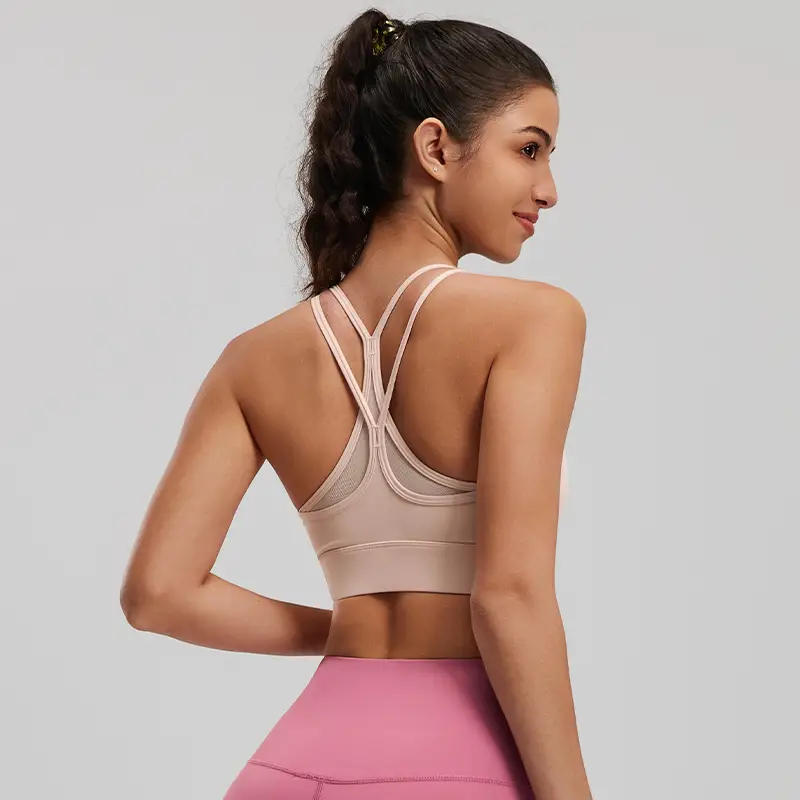
As a sport bra manufacturer, we translate the activity brief into material and construction choices. Performance fabrics may use moisture-management properties and four-way stretch, while elastic bands, removable or fixed cups, and strap designs influence how securely the garment sits during movement. We ask buyers to define the intended support level before the first sample is made.
Fit approval needs a broader checklist than bust circumference. Underband tension, cup position, neckline coverage, side coverage, strap pressure, armhole shape, and back construction all affect wearability.
For styles intended to span several activities, we test samples through stretching, bending, and repeated upper-body movement so the brand can identify gaping, rolling, or excessive pressure before grading and bulk production.
Material choices also affect long-term consistency. Recycled polyester and other sustainability-oriented options may suit a particular brand direction, while nylon- or polyester-based stretch fabrics can be selected for different hand feel, drying behavior, or surface appearance. We approve the actual fabric and elastic combination rather than relying only on fiber labels.
Assortment planning can reduce unnecessary overlap between bra styles. Instead of ordering several visually similar designs, a buyer can assign each SKU a clear role such as low-impact studio use, medium-support training, padded athleisure, or a strappy fashion option.
That structure makes fabric, cup, strap, and underband decisions easier to justify and can simplify sales communication to downstream retailers. Retail price position should be included in that discussion because additional support components and specialized trims can materially change both cost and assembly time.
Coordinate Private-Label Details With the Garment Build
We can integrate brand identity through silicone logos, heat transfer, embroidery, woven labels, reflective printing, hangtags, color choices, and custom packaging. Our customization scope at Joebond also covers cup styles, straps, elastic bands, fabrics, sizing, and labels, so these elements can be resolved within the development brief rather than added late.
Logo placement on custom sports bras deserves physical testing because the garment stretches substantially in use. A mark that looks correctly positioned on a flat sample can shift when worn, and a heavy or rigid application may behave differently from the surrounding fabric. Brands should approve both appearance and stretch behavior before the artwork is released for the full order.
Private-label packaging can be planned at the same stage. Size identification, care information, barcode requirements, hangtags, and polybag or retail packaging should match the destination market and distribution method. When packaging data arrives late, otherwise finished goods can remain blocked from shipment even though garment production is complete.
Elastic components deserve their own approval because they can age differently from the main fabric. Underband recovery, strap stretch, edge binding, and the attachment of cups should be checked after repeated extension and basic wash testing.
A stable body fabric cannot compensate for an elastic that relaxes too quickly, so the complete material system needs to be evaluated as an assembled garment. Placing all of these items on the sample checklist helps merchandising, design, and purchasing teams approve the same commercial version of the garment.
Evaluate Production Discipline, Not Just Sample Quality
A strong sample is only the starting point. We also need a method for keeping measurements, stitching, fabric performance, and logo execution consistent through bulk production, so the technical decisions approved during development remain visible to the production and inspection teams.
Our quality control at Joebond uses checkpoints covering fabric testing, stitching, logo verification, measurements, and final packaging review. We discuss those checkpoints with buyers so the control standard for each batch is defined before production is completed.
Order size and growth plans also matter when selecting a partner. A brand testing a new silhouette may prefer a smaller initial run, while a proven style may require faster scale-up and repeat color orders.
For repeat production, the approved fabric, elastic, cup type, pattern, grading, artwork, labels, and packaging remain tied to the technical standard. This continuity defines how we operate as a sport bra manufacturer when an initial private-label order develops into a larger or recurring program.
The sourcing decision becomes stronger when support engineering and manufacturing control reinforce each other. Fit targets, material performance, branding, sample approval, inspection criteria, packing, and delivery are resolved within the same development path so a private-label bra can scale without losing the qualities approved at sample stage.
Commercial planning can then separate continuity items from seasonal variation. Core colors may carry deeper size ratios and more frequent replenishment, while limited shades can use shorter runs; our production planning applies the same approved construction to both without forcing every order into an identical inventory strategy.
This approach is particularly useful when one bra remains in the range across several seasons, because design continuity and assortment flexibility can develop independently. The approved construction can stay stable while color depth, size ratios, packaging, or order volume change in response to sales.