Our fabric work for custom yoga jackets starts with the way the finished layer will be worn and sold. Warm-up use, studio practice, run?ning, commuting, and casual layering place different demands on recovery, breathability, structure, warmth, surface feel, and wash durability, so we translate the use case into measurable textile requirements before recommending a direction.
Material selection also sits inside our production workflow. The chosen textile has to sew cleanly, accept the planned logo method, remain available across the required colors, and support repeatable bulk production; a fabric that performs well only as an isolated swatch is not enough for a commercial program.
Match Fabric Behavior to the Jacket Silhouette
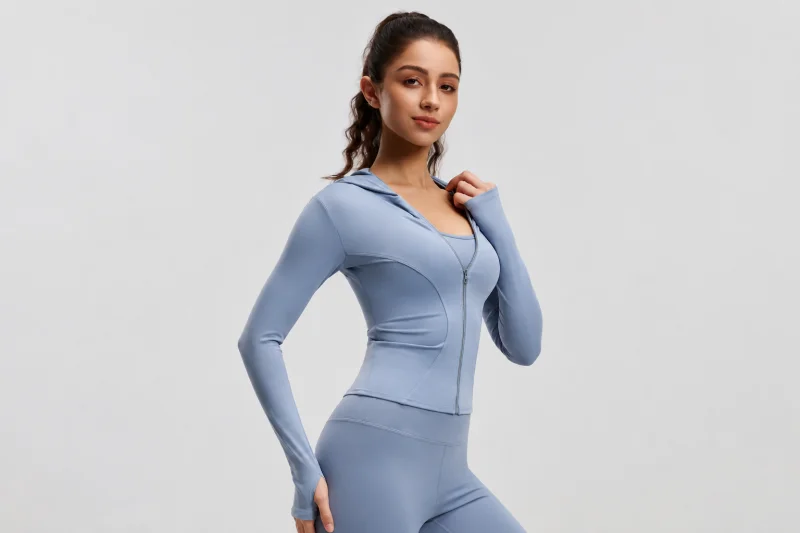
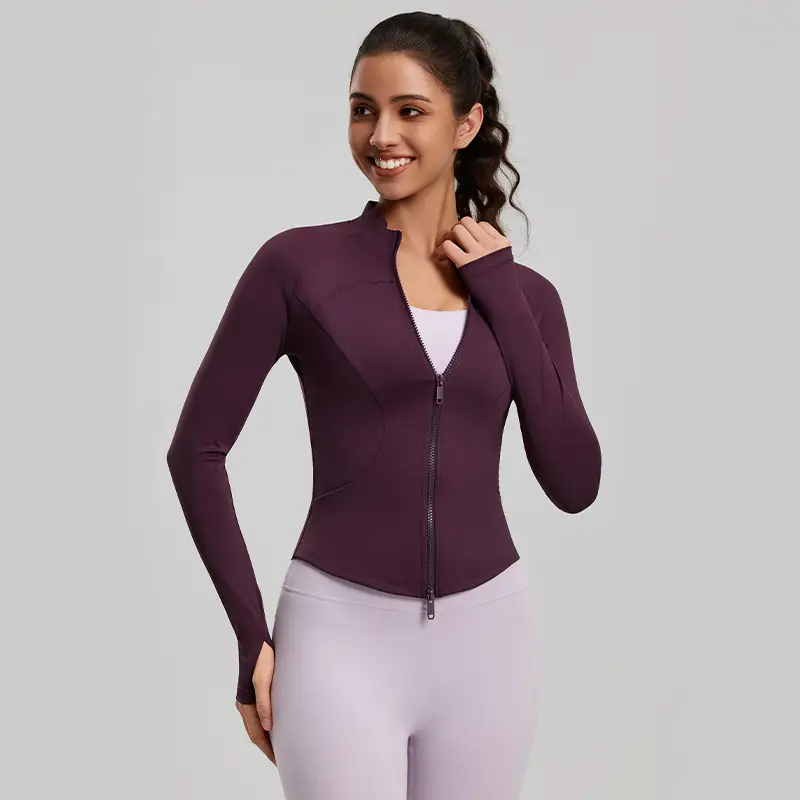
A fitted style places different demands on material than a loose outer layer. The MTWT01 slim fit yoga jacket, for example, uses stretch fabric with a shaped waist, long sleeves, thumb-hole cuffs, a stand collar, and a full-length zipper.
This construction requires a textile with enough recovery to preserve the silhouette while still allowing movement through the shoulders, elbows, chest, and waist. We also check how the fabric returns after repeated extension, because a jacket that stretches well but stays distorted will not hold a consistent fitted shape.
During fabric development, we test more than initial softness. Stretch percentage, recovery after extension, opacity, pilling resistance, shrinkage, colorfastness, and dimensional stability after washing all influence commercial performance, while moisture management and breathability become especially important for training-oriented garments.
Construction details can expose unsuitable material quickly. At the wrist and front opening, thumb-hole cuffs create repeated stress, collars need enough body to sit cleanly, and zippers can ripple if the fabric stretches differently from the tape. A fabric approval should be made on a sewn sample rather than from a swatch alone.
Fabric weight should be selected in relation to season and layering. A lightweight textile can improve ventilation and packability, yet it may show seam impressions or feel less structured around a zipper. Heavier fabric can support a cleaner outerwear shape but may feel too warm for indoor training.
We normally compare several fabric weights on finished samples before recommending a direction for the target market. This is especially useful when a brand expects the same jacket to move between studio, outdoor, and casual-use settings.
Build Customization Around Fabric, Fit, and Branding
Once the base textile is selected, we work with the buyer to coordinate color, sizing, logo technique, and garment proportions. Our Joebond jacket customization process can provide logo embroidery or printing, custom color matching, EU size modification, garment-length adjustment, and collar-height changes; we lock these decisions into the same approved sample.
Regional fit requirements deserve particular attention for custom yoga jackets. A size label does not by itself define shoulder width, sleeve length, torso length, or ease around the chest. Brands selling into different markets should provide target measurements or an approved reference garment, then check whether grading preserves the intended silhouette from smaller to larger sizes.
Branding method should suit both the material and the expected usage. Embroidery introduces needle penetration and added weight, while printed methods place different demands on heat tolerance and surface chemistry. Branding trials use the actual fabric so the logo does not compromise stretch or create unwanted distortion.
Color development can change the behavior of the same base fabric. Dark, saturated, or fluorescent shades may require different dyeing conditions, while pale colors can reveal opacity or surface defects more easily. Brands ordering several colorways should confirm that stretch, recovery, hand feel, and dimensional stability remain acceptably consistent rather than assuming every shade will behave identically.
A written approval matrix keeps those choices aligned when several colorways or regional size sets are developed at the same time. We use it to connect each shade, size range, fabric reference, and fit decision to the correct sample, reducing the risk that one approved detail is applied to the wrong version.
Use Sampling and Supply Capacity to Reduce Launch Risk
A second sample round can be worthwhile when fabric changes materially affect fit or construction. The slim fit yoga jacket should be evaluated for zipper operation, cuff comfort, collar behavior, waist shaping, and recovery after repeated movement.
These checks help us separate a visually attractive prototype from a specification that can survive bulk production and normal customer use. They also give our production team measurable acceptance points for zipper function, recovery, cuff comfort, and shape retention instead of relying on appearance alone.
For time-sensitive sourcing, Joebond lets us combine custom development with ready-stock and broader activewear production. A brand may use existing styles for a faster seasonal entry while reserving deeper fabric or pattern changes for a planned custom run, which can reduce pressure on a single launch date.
Fabric approval should connect product performance with operational reality. A good specification identifies the textile composition or reference, weight, stretch direction, recovery expectation, color standard, finish, testing points, and approved sample.
When those details are tied to a realistic production schedule, material selection becomes a repeatable buying process instead of a subjective choice based on hand feel alone. The approved fabric reference can then guide purchasing, cutting, testing, and later replenishment without reopening the basic material decision.
Repeatability is planned during the first approval rather than added at the end. We identify the fabric by supplier reference, composition, weight, finish, color standard, and any required certification, giving purchasing and production teams a precise baseline for later runs.
A later supply change that requires an alternative textile triggers comparison sampling against that baseline before production is released. This lets a future color or replenishment order change materials deliberately instead of allowing an unnoticed substitution to change fit, hand feel, or appearance.