Our custom sports jackets are developed around two realities: they must perform during movement and they must layer cleanly within an activewear assortment. We set stretch, breathability, structure, warmth, zipper behavior, collar shape, cuff function, and wash expectations against the intended use before selecting the final construction.
Fit development is carried out in the production fabric, not as a separate paper exercise. A textile may appear suitable in isolation yet create zipper rippling, weak recovery, or tight sleeves once assembled, so our fitting sessions test the complete jacket through realistic movement and layering.
Judge Fabric by Recovery, Breathability, and Construction
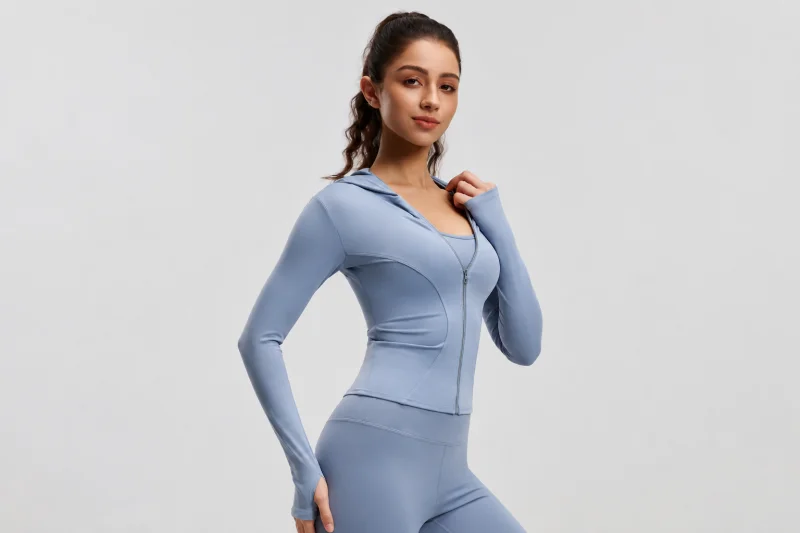
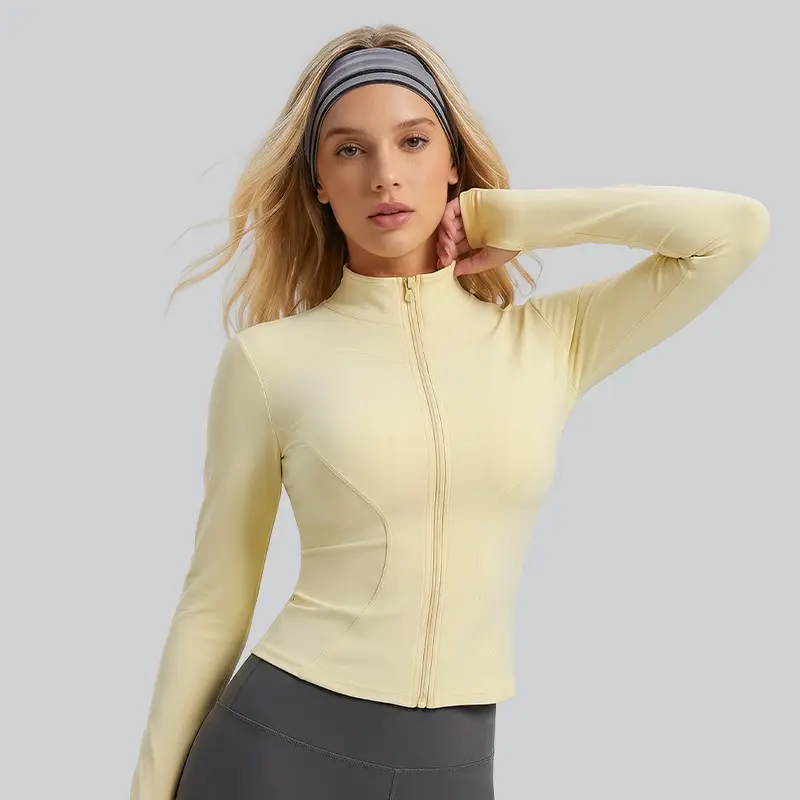
The MTWT01 provides a useful reference for custom training jackets because it combines soft high-stretch fabric with a fitted waist, stand collar, full zipper, long sleeves, and thumb-hole cuffs. A similar design needs material that stretches across the chest, shoulders, and elbows without losing shape after movement.
We examine breathability and moisture handling when a jacket is intended for warm-up or active training rather than only for travel. Drying feel, inside-surface comfort, recovery, and hand feel after repeated laundering all become part of the fabric assessment.
OEKO-TEX certification is listed for the MTWT01 fabric, adding another specification point that brands may choose to request or verify for their own order. When certification matters to a sourcing brief, we connect the requirement to the actual material reference used for sampling and production rather than treating it as a general garment claim.
Zipper and collar behavior should be part of fabric approval. Very soft materials can collapse around a stand collar, while high stretch can cause rippling beside zipper tape if the sewing method is not controlled. Cuffs and thumb holes also need enough recovery to remain comfortable without becoming loose after repeated use.
Seasonal use can change the preferred balance between airflow and coverage. A jacket intended for indoor warm-up may use lighter fabric and closer ventilation control, while an outdoor transition layer may need slightly more substance.
Before material selection is finalized, we have the buyer specify the expected climate and activity level so the textile is tied to a real retail environment instead of an abstract idea of performance. We also review the planned retail price because fabric weight, finishing, and certification can affect both perceived value and sourcing cost.
Develop Fit Around the Intended Layering System
A workout jacket can be cropped, waist length, or longer, and each proportion changes how it pairs with leggings, shorts, skirts, or tops. Within the Joebond program, we offer adjustments such as garment length, collar height, color matching, and regional sizing on the MTWT01 program.
Buyers should decide these dimensions with the full outfit in mind so the jacket supports the intended merchandising story rather than functioning as an isolated item. We can then adjust length, collar height, waist shaping, and layering ease against the bras, tops, or bottoms planned for the same collection.
Shoulder width, chest ease, sleeve length, waist shaping, cuff opening, and hem position all need on-body review. A slim silhouette should still allow reaching and rotation, particularly if the customer may wear a sports bra or lightweight top beneath it. If the collection expects thicker layering, the fit brief needs additional ease rather than simply increasing the labeled size.
Size grading should preserve the same movement balance across the range. Custom sports jackets can become restrictive in larger sizes if only circumferences are expanded, while sleeves and armholes remain proportionally narrow. Selected size-set samples can reveal these issues before the bulk order is cut.
Trim quality affects the customer’s impression as much as the main fabric. Zipper pullers, zipper tape, collar interfacing, thread, and any internal binding should feel compatible with the garment’s price position. A smooth sample zipper is not enough if bulk trims vary, so the bill of materials should identify the approved component reference or an equivalent standard.
Merchandising teams may also want to review the jacket with the intended base layers and bottoms so that hem position and overall proportions support the complete assortment.
Verify Customization, Inspection, and Replenishment
Branding options such as embroidery or printing are tested on the final fabric because stitch density, heat, and surface stretch can alter the appearance of the jacket. Joebond jacket development also lets us offer EU size modification and color customization, giving buyers clear variables to define in the production file before sample sign-off.
We inspect finished jackets for stitching, fabric condition, zipper function, measurements, collar symmetry, cuff construction, logo accuracy, and overall appearance. Because custom training jackets often contain more components than simple tops, we define those checkpoints instead of relying on a broad instruction to check workmanship.
Replenishment strategy can influence the initial sourcing choice. A supplier with stable stock for selected styles may help a retailer respond quickly to demand, while deeper custom runs can support stronger differentiation.
Assortment planning should identify which pieces need unique development and which can benefit from faster supply, then align those choices with fabric availability and production capacity.
A replenishment plan should also consider whether the jacket is a core continuity item or a seasonal fashion piece. Core items benefit from stable fabric and trim references, while trend-led colors may accept shorter selling windows. For a core continuity item, stable stock may create more value; for a trend-led style, deeper customization or a shorter selling window may be the better choice.
Replenishment becomes faster when trim, pattern, fabric, and artwork references already match the approved jacket. Our next-order discussion can then focus on demand, color, and quantity while preserving the fit and appearance established in the original run.