Selecting among wholesale yoga clothing manufacturers requires more than comparing quotations. We present our operation as a production system that has to support development, quality, timing, replenishment, and brand consistency across multiple styles, because a low opening price offers little value if those functions break down at scale.
A useful checklist for custom yoga clothing should test what happens to the buyer’s design after the commercial discussion ends. Our process moves design information from concept through pattern work, sample approval, material preparation, bulk production, inspection, and repeat-order planning with defined handoffs, so the buyer can judge the continuity of execution rather than search for evidence that it might exist.
Compare Development Scope and Customization Depth
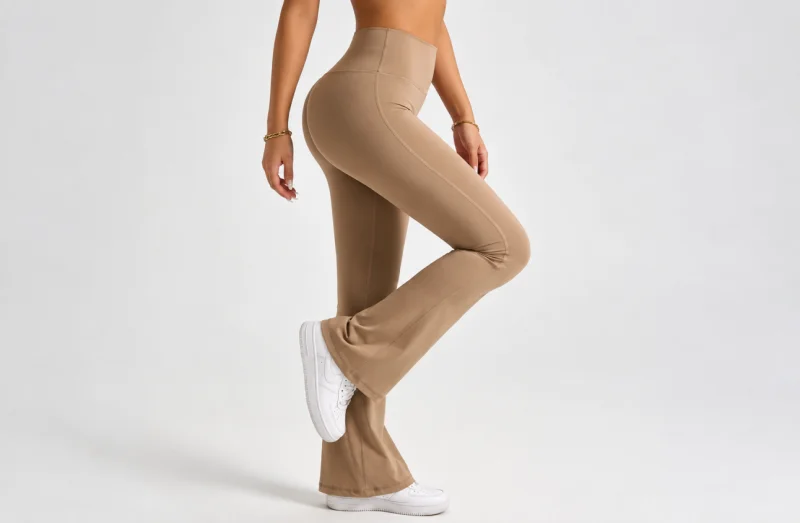
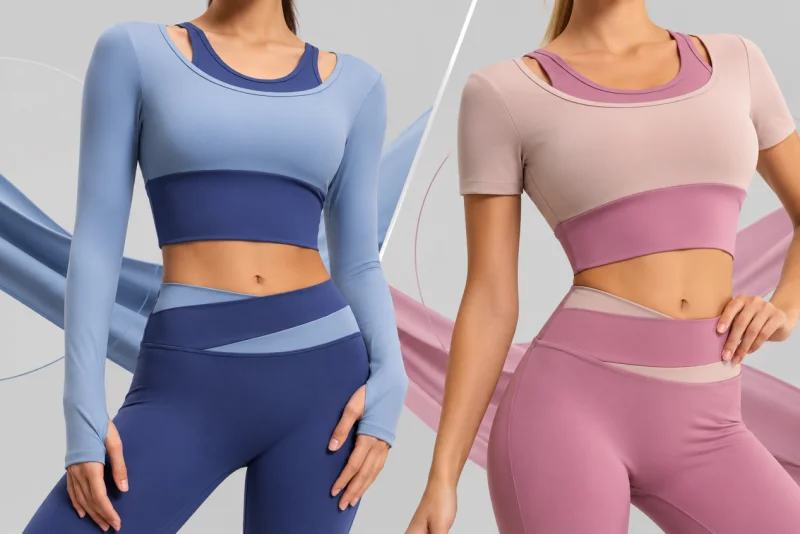
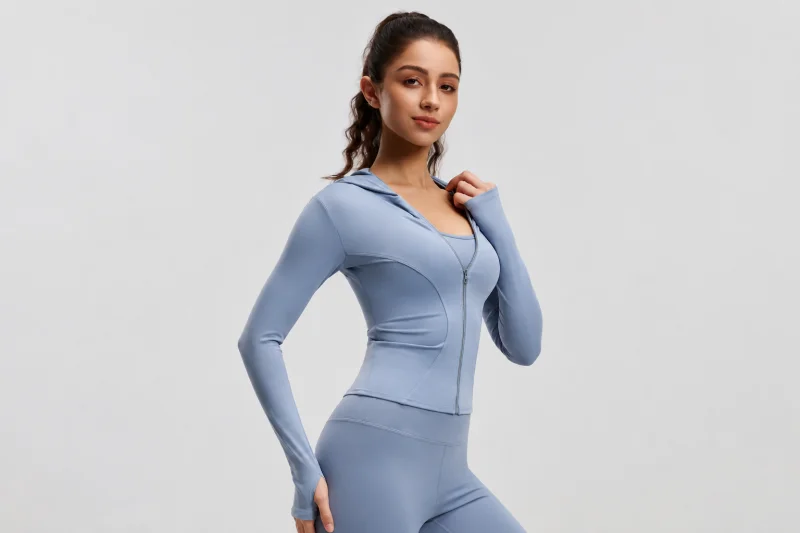
A comparison of yoga clothing suppliers should begin with development coverage. Our OEM workflow for custom yoga clothing can connect pattern grading, prototypes, fabric matching, logo application, and mass production across leggings, sports bras, workout sets, jackets, tops, and other activewear, reducing the number of external vendors a buyer has to coordinate when building a broader range.
Customization depth should match the brand’s commercial stage. A new label may begin with lighter changes to existing products, while an established buyer may require original patterns, unique fabrics, custom sizing, packaging, and more detailed workmanship.
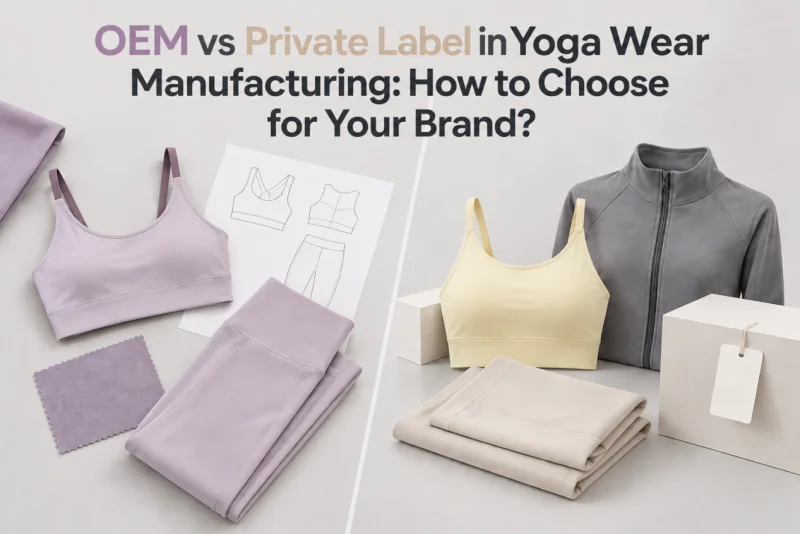
Different order profiles need different routes. Our team explains how MOQ, target price, material availability, customization depth, and launch date affect whether an item is better served by ready stock, adaptation of an existing base, or deeper OEM/ODM development.
Sampling is the point where development capability becomes measurable. We record revision comments, control artwork and measurement versions, and link the accepted sample to the working specification so bulk teams receive the same decisions that the buyer approved.
Our quotation review separates comparable cost items before a shortlist is made. One quotation may include sampling, labels, packaging, inspection, or local delivery while another lists only garment production, so separating one-time development charges from recurring unit costs makes the comparison more meaningful.
Check Capacity, Quality Systems, and Delivery Reliability
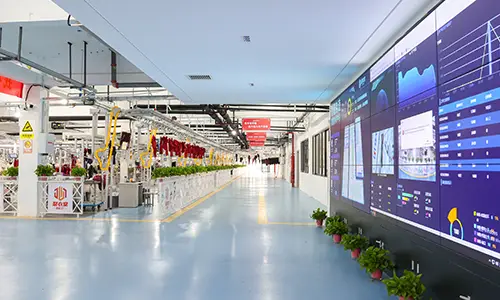
Capacity figures become meaningful when they are considered alongside the planned order. At Joebond, our operating scale combines high-volume activewear manufacturing with substantial ready-stock availability, giving us more than one way to plan supply for different order profiles.
Our customer program also defines accelerated production windows for larger custom batches and includes a late-delivery compensation mechanism, so buyers can discuss timing against a stated service framework rather than an undefined promise of fast production. Even with those targets, we ask buyers to confirm how style complexity and material availability affect the schedule for their specific order.
Our quality management extends from materials to final packing. The program references ISO 9001, ISO 14001, and BSCI systems, with checks spanning fabric sourcing, sampling, production, and packaging; during a quality-system review, we can define checkpoints, tolerances, and corrective-action expectations with the buyer.
We also use ready stock as an option for businesses that need quick replenishment. Combining stocked products with custom production can balance speed and differentiation across a collection, provided branding, minimum quantities, available colors, and repeatability are defined clearly for each route.
We are comfortable being reviewed against the same operational questions applied to any candidate: how specifications are recorded, how material changes are approved, which inspections are performed, and how production delays are communicated.
Capacity numbers only become useful when the order can be sequenced without losing control of detail. For multi-style programs, our planning team checks material readiness, sample status, shared trims, size ratios, packing requirements, and inspection dates. This turns capacity into a working schedule, showing which styles can run in parallel and where one delayed approval could affect the wider launch.
Assess Supply-Chain Fit for Long-Term Growth
A supplier relationship becomes more valuable when it reduces coordination work as the assortment grows. Our integrated operating model connects raw materials, yarn, textile production, dyeing, garment manufacturing, sales, and visual services. That structure lets our teams coordinate fabric, color, production, and branding decisions within one workflow instead of requiring the buyer to manage a separate vendor at every stage.
Service responsiveness is demonstrated through execution. Dedicated account support, sample handling, logistics coordination, and defined responsibility for revisions are connected to production records, allowing our team to answer quickly without turning schedule-critical decisions into undocumented verbal promises.
The buyer’s priorities still determine the final ranking: development capability, MOQ, material control, sampling, capacity, quality systems, lead time, stock availability, branding depth, logistics, and after-sales support. Joebond can be assessed against those criteria directly, giving the sourcing team a transparent basis for deciding whether our integrated model fits its growth plan.
Long-term sourcing also depends on ownership when problems occur. Experienced yoga clothing suppliers need clear routes for development changes, quality disputes, logistics decisions, and repeat-order support; our account and production teams define those responsibilities so the buyer is not forced to coordinate every issue across unrelated contacts.