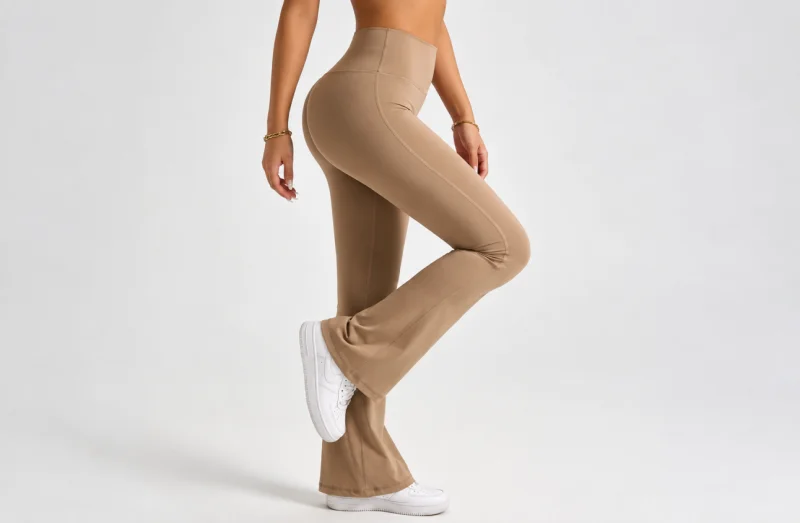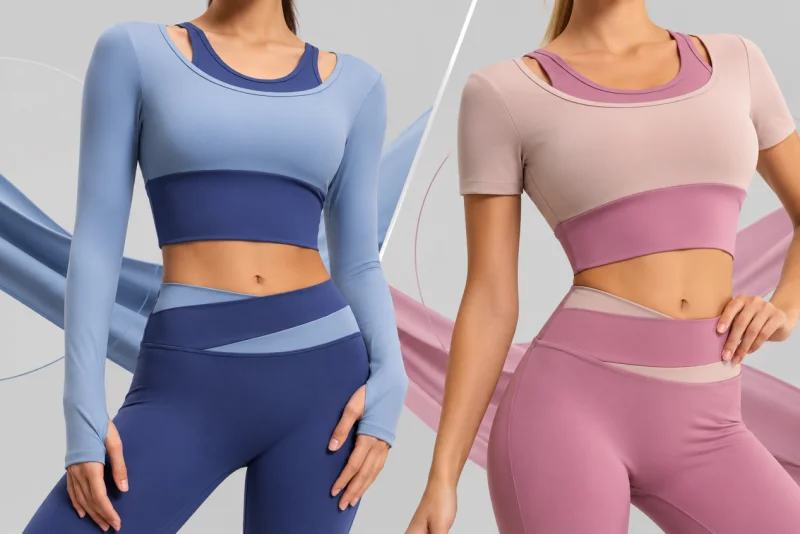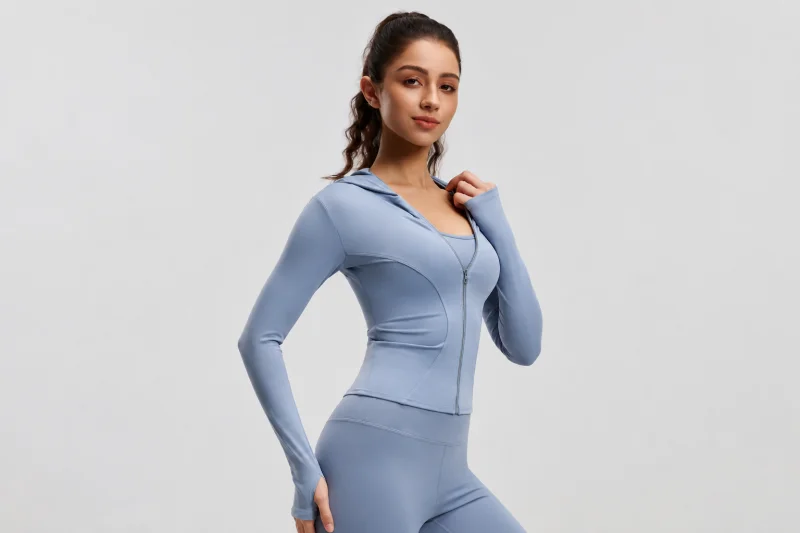
Retail buyers and private-label programs often compare custom long sleeve shirts with workout long sleeve tops before building seasonal collections. Although both categories appear similar, they satisfy different commercial goals. Material performance, production flexibility, inventory planning, and branding opportunities all influence purchasing decisions for wholesalers and apparel businesses.
Product Positioning Across Commercial Markets
Long sleeve activewear serves multiple retail channels, from yoga studios to sporting goods stores. Buyer expectations vary according to target consumers, regional climate, and planned price positioning. Understanding these commercial differences supports stronger product planning and reduces unnecessary inventory overlap.
Yoga-focused garments usually prioritize soft touch, flexible movement, and extended comfort during lower-impact activities. Workout-oriented products often emphasize moisture management, durability, and support for repeated training sessions. These distinctions influence fabric development and product presentation across retail collections.
Private-label buyers should also review merchandising opportunities. Coordinated color stories, matching bottoms, and seasonal capsule collections can increase average order value while maintaining a consistent visual identity across multiple product categories.
As a vertically integrated manufacturing partner, we support brands with material sourcing, development, production, and finished inventory planning. This integrated process shortens communication cycles while helping buyers coordinate production schedules more efficiently.
Comparing Fabric Performance Requirements
Fabric choice affects customer satisfaction long after purchase. Stretch recovery, breathability, surface appearance, and washing performance all contribute to repeat sales. Buyers should evaluate technical specifications alongside commercial pricing rather than focusing on one factor alone.
Many retailers request custom long sleeve shirts using nylon-spandex or polyester-spandex blends because these materials balance flexibility with production efficiency. Fabric weight should match intended seasonal use while maintaining reliable shape retention after repeated washing.
Workout collections frequently require stronger moisture transport during higher-intensity exercise. Surface texture, yarn construction, and finishing treatments influence drying speed and wearer comfort. Testing fabrics before mass production helps reduce product returns and supports long-term retail reputation.
Consistent raw material sourcing also improves production stability. When yarn quality remains uniform across manufacturing batches, finished garments maintain similar appearance, color consistency, and sizing, creating greater confidence for wholesale purchasing programs.
Custom and Workout Long Sleeve Tops in Private-Label Collections
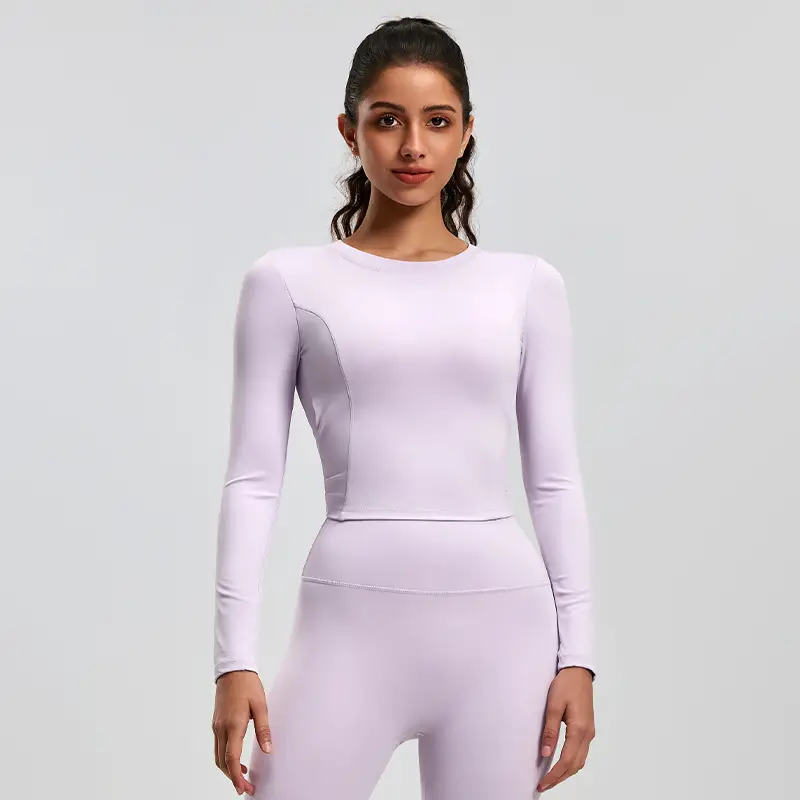
Workout Long Sleeve Tops can support diverse retail strategies because they appeal to gyms, fitness chains, online stores, and sporting retailers. Their broader athletic positioning often allows wider seasonal demand than products designed exclusively for yoga practice.
Product customization extends beyond printed logos. Neckline construction, cuff finishing, seam placement, reflective elements, and packaging all contribute to perceived product value. Small design adjustments can differentiate one private-label collection from another without significantly increasing manufacturing complexity.
Buyers should review grading standards carefully before confirming production. Consistent sizing across different markets minimizes customer complaints and simplifies future repeat orders, particularly for international wholesale distribution where return costs may be higher.
We cooperate closely with customers during sample development, material confirmation, and production review. Early communication reduces revision cycles while allowing commercial decisions to remain aligned with target retail positioning and expected customer demand.
OEM and ODM Manufacturing Considerations
Manufacturing capability influences more than delivery schedules. Stable production management, quality inspection procedures, and raw material coordination all affect finished product consistency across repeat purchase orders.
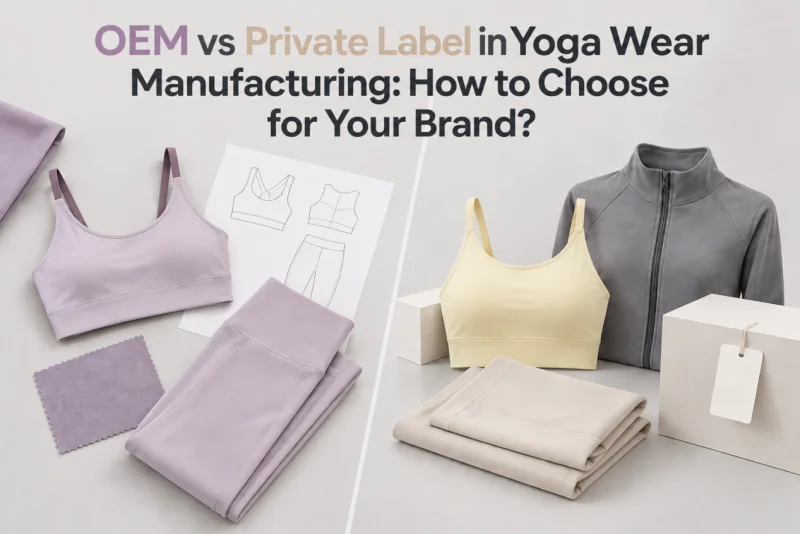
OEM programs generally follow customer-developed specifications, while ODM services provide existing development resources that buyers can customize. Both approaches require clear technical documentation, approval procedures, and realistic production planning before bulk manufacturing begins.
Experienced sourcing teams evaluate stitching density, seam durability, colorfastness, shrinkage, and packaging standards before shipment. These quality checkpoints reduce commercial risk and help retailers maintain dependable customer satisfaction across multiple selling seasons.
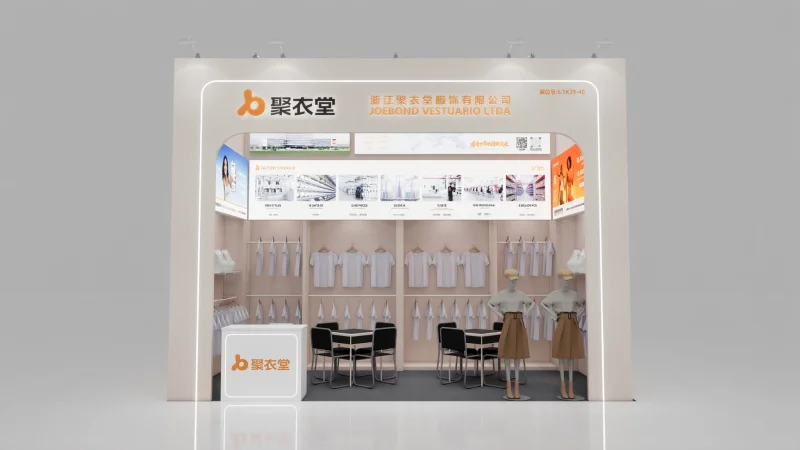
Joebond supports OEM and ODM cooperation through vertically integrated operations covering textile sourcing, garment manufacturing, and finished apparel supply. This coordinated structure helps commercial buyers simplify supplier communication across different production stages.
Inventory Planning and Supply Chain Efficiency
Inventory planning affects profitability as much as product design. Retailers balancing stocked products with customized production often improve cash flow while maintaining flexibility for promotional campaigns and seasonal launches.
Many buyers combine workout long sleeve tops with complementary activewear categories to create coordinated collections. Unified color palettes and shared fabrics simplify production while supporting stronger merchandising across physical stores and online platforms.
Forecast accuracy improves when sales history, regional climate, and promotional calendars are reviewed together. Balanced purchasing decisions reduce excessive stock while ensuring sufficient inventory during periods of increased consumer demand.
We also support customers seeking finished inventory alongside customized production. This combination allows businesses to react more quickly to urgent replenishment requirements without interrupting longer-term private-label development plans.
Building Long-Term Supplier Partnerships
Reliable supplier relationships extend beyond individual purchase orders. Transparent communication, consistent manufacturing quality, and responsive technical support create stronger cooperation over multiple product cycles.
When evaluating custom long sleeve shirts, buyers should compare sampling efficiency, quality consistency, production capacity, and after-sales communication together. Long-term value usually depends on dependable execution rather than initial quotation alone.
Successful sourcing partnerships continue improving after delivery. Production feedback, retail sales performance, and customer comments provide useful direction for future product refinement, helping collections remain commercially competitive across changing market conditions.
Joebond works with global retailers, wholesalers, and private-label brands seeking dependable yoga apparel manufacturing. Through integrated production resources, we focus on practical cooperation that supports stable supply, flexible customization, and long-term commercial growth.
Retail success hinges on harmonizing product purpose with marketing strategy, not treating all clothes same. Buyers of workout long sleeve tops should consider performance, production, supply stability, and long-term partnership prospects. Joebond provides integrated OEM and ODM services to improve sourcing efficiency and adapt to global garment markets.