Custom production and ready-made supply solve different commercial problems, so our first task is to identify which problem matters most for the jacket program. Launch speed, design control, inventory exposure, market testing, and expected reorder frequency determine whether the buyer benefits from stock, customization, or a combination of both.
The decision around custom yoga jackets usually depends on the number of variables the buyer wants to own. Fabric, color, collar shape, garment length, size specification, logo method, packaging, and coordinated bottoms can all affect development time. A stocked jacket reduces those decisions, but it also limits how far the product can be differentiated.
Use Ready-Made Supply When Speed Leads the Decision
A yoga jacket wholesale program based on existing stock can shorten the path from selection to shipment because the base garment has already been developed. This route works well when a buyer needs quick replenishment, wants to test a market with less development work, or needs supporting pieces for an assortment that already has a clear visual direction.
Speed still depends on disciplined confirmation. Before relying on a short dispatch window, buyers should confirm available colors, size ratios, fabric characteristics, construction, packing format, and stock quantity. We handle stock as a defined product reference, not as a substitute for checking whether the existing jacket actually fits the collection.
Existing styles can also serve as a practical benchmark. A buyer may evaluate stretch, zipper operation, collar comfort, sleeve length, thumb-hole cuffs, and waist shaping on a physical garment before deciding whether deeper customization is necessary. That comparison is often more useful than discussing a completely new jacket only from sketches.
Ready-made supply has limits when brand identity depends on proprietary proportions or materials. Requirements such as a different body length, collar height, regional size set, distinctive color, or special logo placement can make a stock garment too restrictive. At that point, the time saved at the beginning can be outweighed by a product that does not fully match the intended positioning.
We use stocked options as one procurement tool rather than as a replacement for development. Their strongest role is usually fast testing, replenishment, or assortment support where the existing specification already fits the commercial need.
Choose Custom Development for Controlled Differentiation
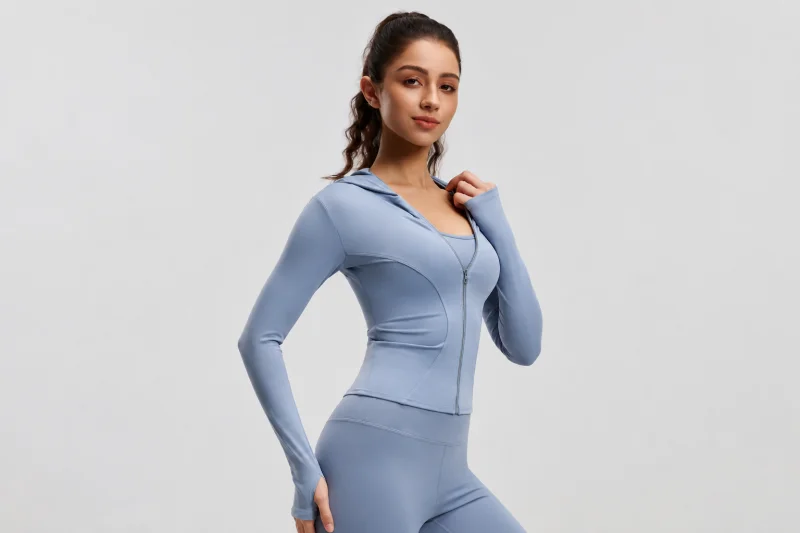
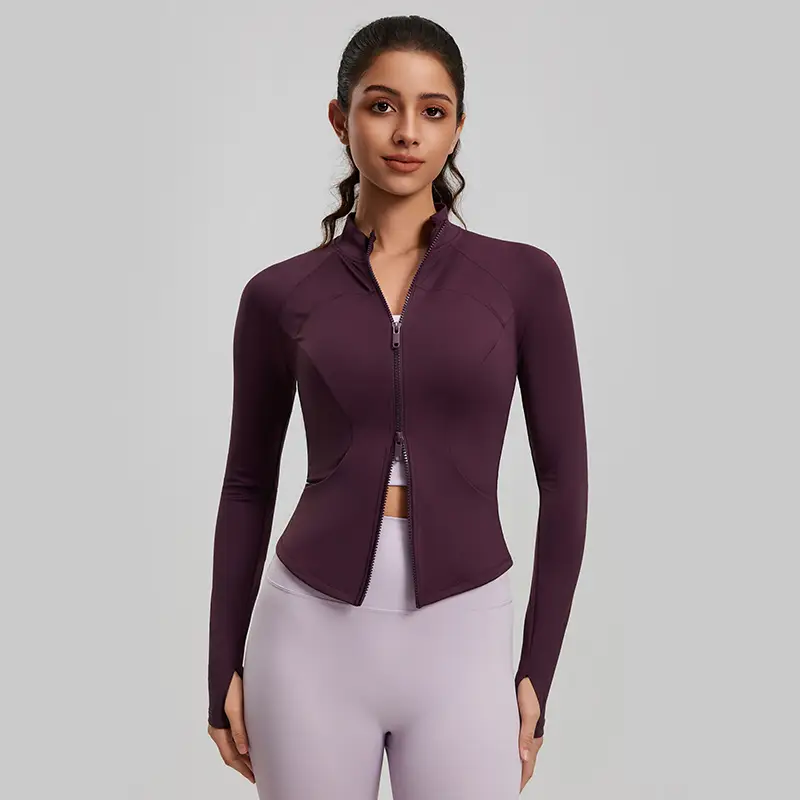
When a jacket must carry a specific brand identity, we move the discussion toward pattern, fabric, fit, and decoration. The MTWT01 reference, for example, uses a shaped waist with a stand collar and full-length zipper; its long sleeves finish with thumb-hole cuffs, and the body uses high-stretch fabric. Those features provide a concrete base from which a buyer can decide what should remain and what should change.
Joebond‘s jacket program lets us adjust color matching, logo printing or embroidery, EU sizing, garment length, and collar height. Those choices are consolidated in the approved sample, giving the buyer one finished jacket to review instead of separate decisions on logo, color, and fit.
Customization is most efficient when the brief distinguishes essential changes from optional preferences. A required size conversion or proprietary color may be central to the brand, while a minor trim change may add development work without improving the commercial result. We help buyers prioritize the decisions that materially affect identity, fit, or customer use.
Fabric selection also needs to stay connected with construction. Stretch, recovery, breathability, hand feel, and surface behavior influence how a fitted jacket sits on the body and how branding performs during movement. Before approval, we test the selected decoration on the intended fabric instead of assuming that one method behaves the same on every textile.
Sampling adds time before production, but it also creates a formal approval point. Measurement comments, zipper details, cuff behavior, logo scale, color, and workmanship can be resolved before the bulk run, reducing the risk of discovering design disagreements after a larger quantity has been completed.
Build a Hybrid Plan Around Demand and Launch Timing
Many buyers do not need to choose one sourcing method for every jacket in the business. A core style can be developed to a custom specification, while stocked outer layers can cover an urgent promotion or a secondary sales channel. We can plan both flows so the brand does not depend entirely on long development cycles or entirely on generic inventory.
Repeat orders make the difference between the two models even clearer. After custom yoga jackets have an approved fabric, pattern, grading, artwork, and packing standard, later orders can move more efficiently because the development baseline already exists. Stocked goods remain faster at the selection stage, but a mature custom program can also become predictable when specifications are controlled.
Regional demand can change the quantity mix inside a yoga jacket wholesale program without changing the garment itself. Our order planning keeps size allocation and color demand separate from the approved construction wherever possible, so commercial adjustments do not reopen settled technical work.
Our Joebond setup combines ready-stock and custom-manufacturing routes. That flexibility lets the buyer assign speed to one SKU and deeper differentiation to another after comparing cost, development effort, delivery requirement, minimum quantity, and brand control.
The right sourcing model is the one that matches the job of each jacket. Stock can shorten a launch or support replenishment, custom development can protect distinctive fit and identity, and a hybrid plan can use both without fragmenting purchasing and quality responsibility.