When we order custom sports jackets, quality control affects more than the first shipment. It shapes customer reviews, return rates, and the consistency of future collections. A practical checklist helps our buying team review materials, fit, workmanship, customization, and delivery readiness before bulk goods leave the factory.
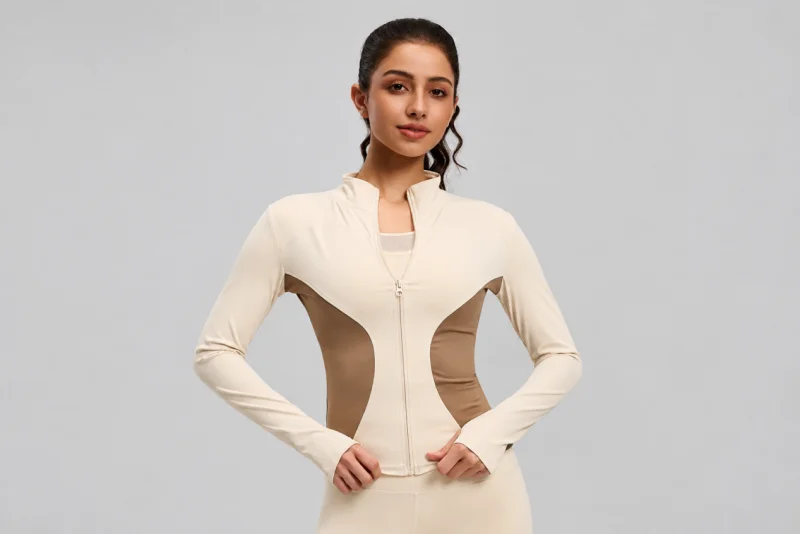
The MTWT01 slim-fit yoga jacket offers useful checkpoints for this process. Its soft high-stretch fabric, curved tailored waist, stand collar, full-length zipper, long sleeves, thumb-hole cuffs, and stable hem create clear standards that can be measured on samples and production units.
Define the inspection brief before sampling
We begin by writing a product brief that everyone can follow. It records the intended silhouette, size range, color references, logo position, label details, packaging method, and acceptable tolerance for measurements. A written brief reduces interpretation gaps between our design team, factory, and inspection staff.
For this jacket, the brief can describe a slim fit with a curved tailored waist and double curved cut. We also record the collar height, sleeve length, hem position, zipper length, and cuff opening. If our market needs a longer body or a different neckline, these points become approved modification items rather than informal requests.
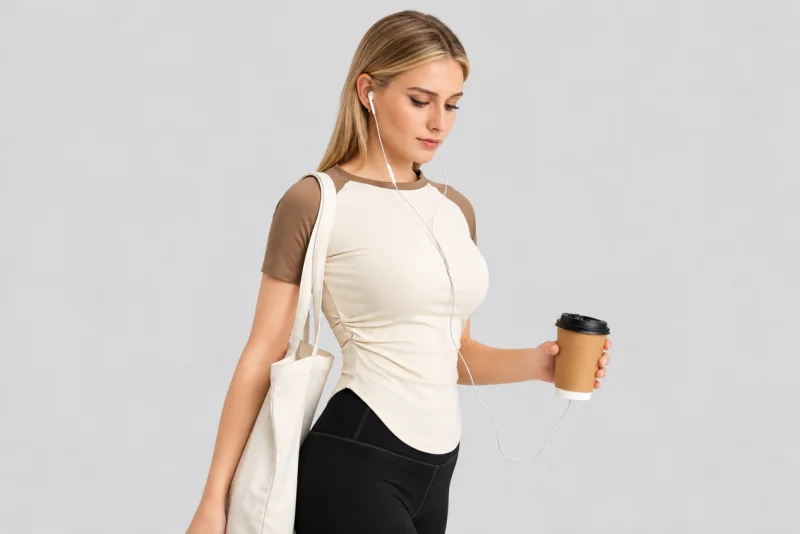
The same document should identify the activity range. MTWT01 is designed for yoga, running, training, outdoor walks, and everyday wear. Each use can influence the fit review. We check whether the jacket allows arm movement, stays stable during stretching, and layers comfortably over a sports bra or base top.
Check fabric identity and performance
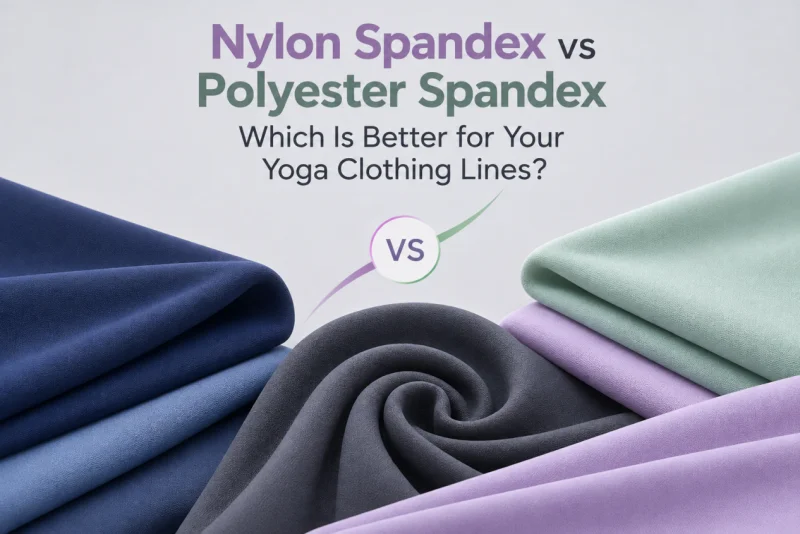
Fabric verification is a central step in bulk sports jackets. We compare the approved swatch with production fabric for hand feel, stretch response, color, and surface appearance. MTWT01 uses soft high-stretch material with breathable, moisture-wicking, and quick-drying characteristics. These features should be confirmed against the approved sample.
The fabric is described as Oeko-Tex certified stretch fabric. Our quality file can retain the relevant certification documentation supplied for the order. We also inspect rolls for holes, streaks, shade variation, and contamination before cutting. Consistent inspection at this stage lowers the chance of visible defects across different size lots.
Stretch recovery matters for a slim silhouette. We assess whether panels return to their original shape after repeated extension during sampling. The product description notes that the fabric maintains elasticity after repeated washing and does not deform easily. We can use wash testing and measurement records to compare the approved sample with production pieces.
Review construction and movement details
A jacket can look correct on a table yet feel different in motion. We inspect seam alignment, stitch density, thread trimming, and panel matching. The stand collar should sit evenly around the neck, while the smooth full-length zipper should open and close without catching.
Thumb-hole cuffs need a focused check. We examine the opening position, reinforcement, and sleeve balance on both sides. During a wear test, the thumb loops should hold the sleeves in place without creating uncomfortable pressure. We also review whether the cuff returns to shape after stretching.
The stable hem is another practical checkpoint. We look for skipped stitches, waviness, twisting, or uneven binding. A controlled stretch test shows whether the hem remains in position during movement. For customers who use the jacket for training or walking, this detail supports a neat appearance and comfortable layering.
Validate sizing and customization
Sizing errors create avoidable returns, especially when a collection serves several regions. We compare production measurements with the approved size chart for chest, waist, shoulder, sleeve, and garment length. Joebond supports EU size customization, so our team can align the chart with regional customer expectations before bulk cutting begins.
We also review grading between sizes. A consistent increase from one size to the next helps preserve the intended slim profile without restricting movement. If our buyers request an adjusted garment length or modified collar height, those changes should appear on the final pattern and fit sample.
Logo embroidery, printing, labels, and color matching require their own approvals. We check artwork scale, placement, thread or ink appearance, and color references under consistent lighting. A signed approval sample gives inspectors a clear comparison point when customized goods move through production.
Build a staged inspection plan
Quality control works better as a sequence than as a single final check. We inspect fabric before cutting, panels during sewing, and finished garments before packing. This approach allows our team to identify recurring issues while correction remains practical.
During sewing, inspectors review seam strength, zipper installation, collar symmetry, cuff attachment, and hem stability. They can record defect type, location, quantity, and corrective action. Finished-garment checks then cover measurements, appearance, logo execution, labels, folding, and packaging.
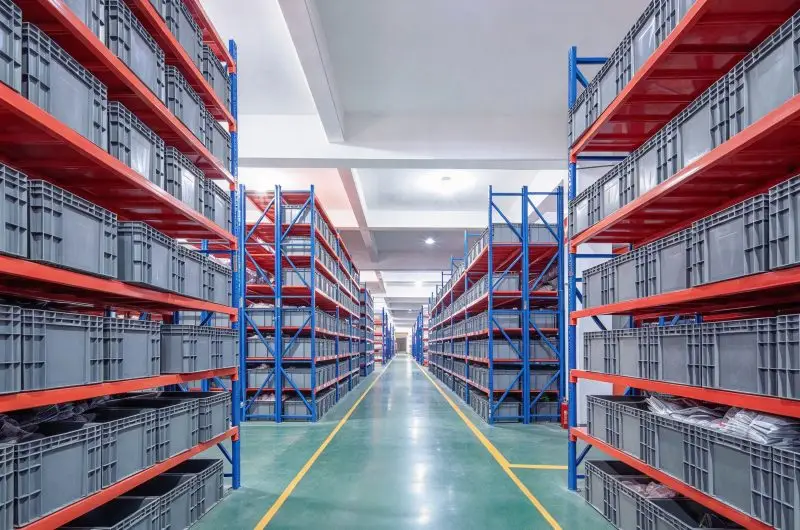
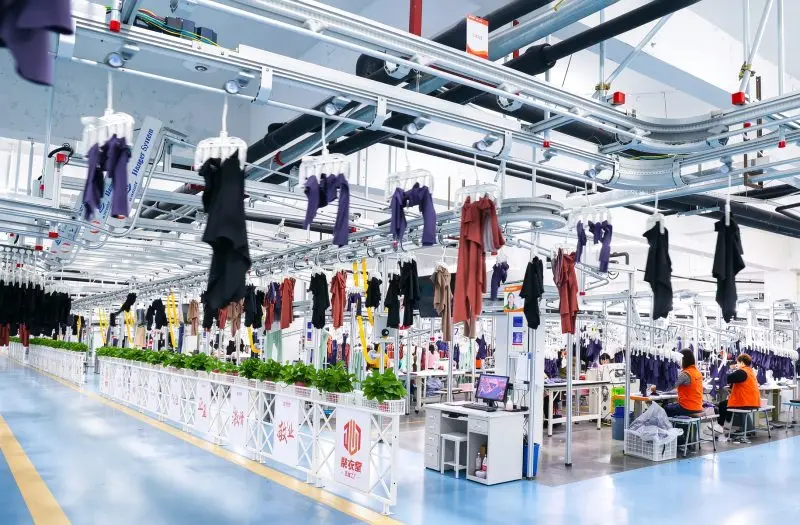
Joebond describes stitching and fabric inspection before shipment. We can complement that process with our own sampling plan based on order size and risk. Photos, measurement sheets, and approved samples create a shared record for future reorders. The record is valuable when colors, trims, or regional size requirements change.
Match production planning with replenishment needs
A reliable sports jacket manufacturer should align quality control with production planning. We coordinate sample approvals, material readiness, customization, inspections, and shipping in one schedule, helping prevent late artwork or fabric changes from reaching production unnoticed.
With low-MOQ trial orders, Joebond helps new collections test fit and market response before scaling up. We also support repeat orders for proven colors and sizes, checking replenishment goods against approved samples to maintain consistent quality.