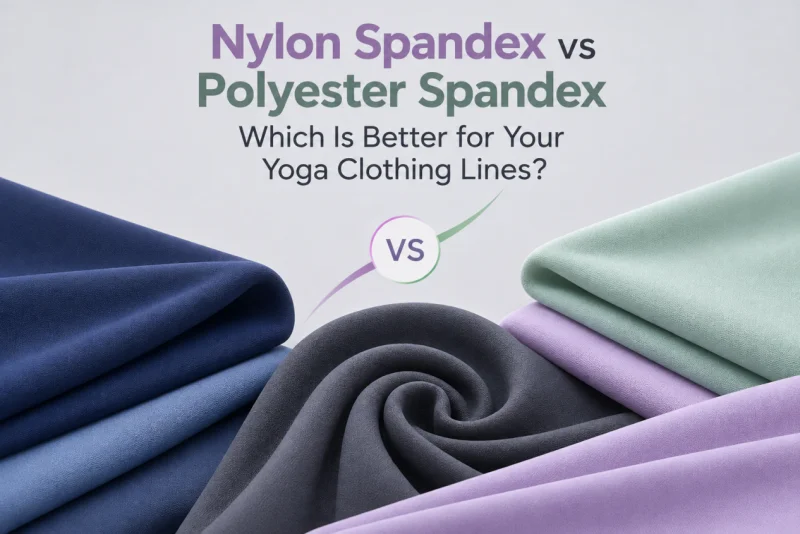
Nylon-spandex and polyester-spandex are two widely used fabric blends in yoga and activewear manufacturing. Both offer the stretch and flexibility yoga clothing needs, but differences in softness, moisture management, durability, and cost can affect the performance and market positioning of finished garments.
For yoga apparel brands, the best choice depends on the garment application, customer expectations, and product positioning. This guide compares nylon-spandex and polyester-spandex fabrics on key performance factors and explains how to choose materials for different yoga clothing lines.
What Is Nylon-Spandex Yoga Fabric?
Nylon-spandex is a stretch fabric made by blending nylon (polyamide) with spandex (elastane). Nylon provides strength, abrasion resistance, and a smooth surface, while spandex adds elasticity and helps the fabric recover after stretching.
Composition and Fabric Construction
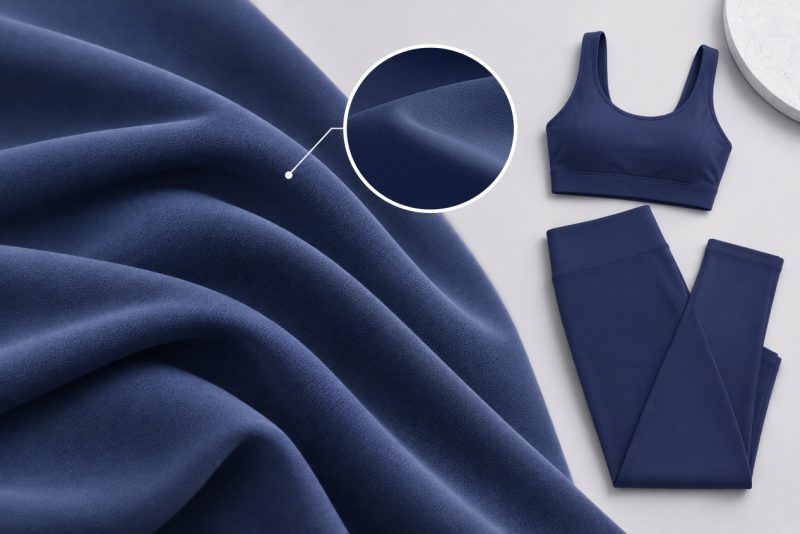
Nylon typically forms the majority of the blend, providing its basic structure and surface characteristics. Spandex makes the fabric more adaptable to body movements, particularly in fitted garments.
In yoga apparel manufacturing, nylon and spandex are commonly combined through circular or warp knitting. Depending on yarn selection, knit structure, and finishing, the resulting fabric can offer four-way stretch, a soft hand feel, and varying levels of compression.
Common Applications
Nylon-spandex is frequently selected for comfort-oriented yoga clothing, including:
- Yoga leggings and fitted yoga pants
- Sports bras and supportive workout tops
- Seamless-style activewear and fitted layers
- Premium athleisure and everyday fitness clothing
Its smooth texture makes it especially attractive for collections that emphasize comfort, appearance, and extended wear.
What Is Polyester-Spandex Yoga Fabric?
Polyester-spandex combines polyester fibers with elastane to create flexible, durable activewear fabric. Polyester adds dimensional stability, low moisture absorption, and easy care, while spandex provides stretch and recovery.
Composition and Fabric Construction
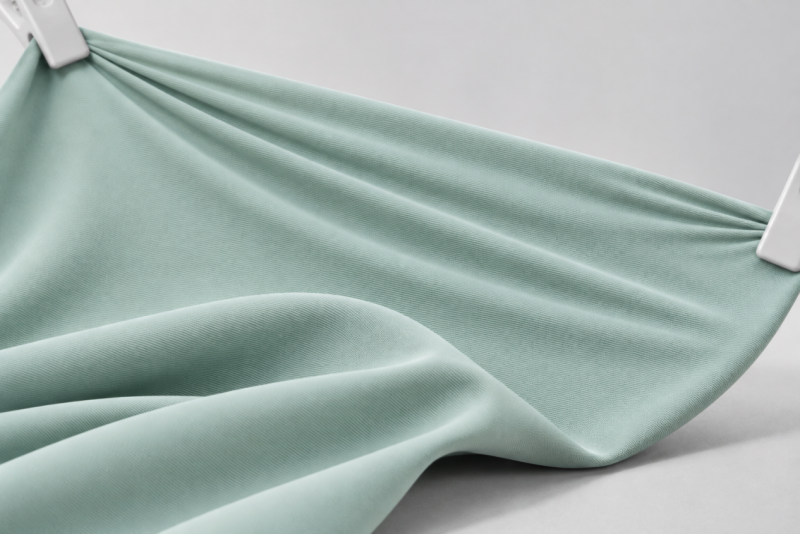
Polyester generally accounts for most of the fabric composition, with spandex incorporated to provide the elasticity required for fitted activewear. Like nylon-spandex, polyester-spandex can be manufactured using different knitted constructions.
Polyester’s relatively low moisture absorption also makes it useful for fabrics designed to dry quickly, although effective sweat management still depends on fabric construction and finishing.
Common Applications
Polyester-spandex is commonly used in:
- High-stretch yoga leggings and workout sets
- Training tops and fitness apparel
- Printed leggings and coordinated activewear
- Performance-oriented sportswear collections
Its versatility makes it suitable for brands seeking a balance of performance, design flexibility, and production costs.
Nylon-Spandex vs Polyester-Spandex: What Are the Key Differences?
The main differences between these two yoga fabric blends involve surface feel, moisture behavior, dyeing methods, and typical material costs. However, fabric weight, knitting structure, and spandex content can significantly influence the finished garment.
| Comparison | Nylon-Spandex | Polyester-Spandex |
| Softness | Often smooth and soft | Varies from smooth to firmer |
| Stretch | Flexible, depending on construction | Flexible, depending on construction |
| Shape retention | Depends on elastic recovery and finishing | Depends on elastic recovery and finishing |
| Moisture behavior | Absorbs more moisture | Absorbs less moisture |
| Durability | Generally strong abrasion resistance | Good durability and easy maintenance |
| Color and printing | Suitable for rich solid colors | Well suited to sublimation printing |
| Material cost | Often relatively higher | Generally more cost-effective |
| Typical positioning | Premium yoga and athleisure | Training, printed, and value-oriented activewear |
1. Softness and Comfort
Nylon-spandex often offers a softer, smoother hand feel, making it appealing for leggings worn during yoga, stretching, or everyday activities.
Polyester-spandex can feel slightly firmer in comparable constructions. However, fine-denier yarns, brushing, and proper finishing can produce polyester fabrics that feel very soft.
2. Stretch and Shape Retention
Both nylon-spandex and polyester-spandex can provide excellent flexibility and shape retention when manufactured with suitable spandex content and knitted structures.
Spandex contributes elasticity, while yarn arrangement, knit density, and finishing influence how effectively a fabric recovers after stretching. Compression and long-term fit also depend on garment construction. Brands should compare actual fabric samples rather than assuming either blend provides better support or recovery.
3. Breathability and Moisture Management
Polyester absorbs less moisture into its fibers than nylon and can be advantageous when quick drying is a priority. Nylon absorbs somewhat more moisture, which may influence its drying behavior and comfort under different conditions. However, moisture absorption should not be confused with breathability.
Air permeability depends heavily on fabric construction, while moisture-wicking performance depends on capillary action, yarn structure, and finishing treatments.
4. Durability and Maintenance
Both nylon-spandex and polyester-spandex can provide good durability when manufactured with suitable yarns and fabric constructions.
Nylon is generally valued for its abrasion resistance, while polyester offers good dimensional stability and easy-care properties. However, resistance to pilling, surface wear, and repeated washing depends on fabric construction, yarn quality, and finishing.
5. Color and Printing Compatibility
Nylon is commonly dyed with acid dyes, making it well-suited for rich solid-color collections. Polyester typically uses disperse dyes and is particularly compatible with dye-sublimation printing. This process enables detailed graphics and all-over patterns on suitable polyester fabrics. For printed yoga clothing, polyester-spandex is often a practical choice.
6. Cost Considerations
Polyester-spandex is often more economical than comparable nylon-spandex fabrics, particularly for larger-volume collections. Nylon-spandex may carry higher material costs, especially when premium yarns or specialized finishes are required.
Which Fabric Is Better for Different Yoga Clothing Lines?
Activewear collections feature diverse garments designed for distinct physical activities. Matching the fabric blend to each garment’s role optimizes performance and customer satisfaction.
1. Yoga Leggings and Yoga Pants
When comparing polyester vs nylon leggings, nylon-spandex is often a suitable choice for comfort-focused studio yoga. Its smooth texture can provide a pleasant feel during stretching, floor movements, and extended wear.
For hot yoga or more intensive workouts, polyester-spandex leggings can be a practical option, particularly when designed with moisture-wicking finishes and suitable fabric construction.
2. Sports Bras and Fitted Tops
Both nylon-spandex and polyester-spandex can be used for sports bras and fitted tops. Nylon-spandex is often selected for its soft-touch comfort, while polyester-spandex can suit performance-oriented designs requiring easy-care fabrics and moisture management.
However, the level of support depends on the garment’s construction, elastic components, fit, and fabric recovery rather than fiber composition alone.
3. High-Intensity Training Collections
Polyester-spandex is often suitable for performance-oriented activewear because of polyester’s low moisture absorption and quick-drying potential. With appropriate fabric construction and moisture-wicking finishes, it can help manage perspiration during high-intensity workouts.
4. Premium Yoga and Athleisure Collections
Boutique yoga brands and lifestyle athleisure lines target consumers who want refined textures and a premium hand feel. Nylon-spandex delivers a high-end look and comfortable fit suitable for all-day wear.
5. Printed Yoga Clothing Collections
Polyester-spandex is particularly suitable for dye-sublimation printing, which supports detailed graphics, color gradients, and all-over patterns on compatible fabrics.
Nylon-spandex can also be printed using suitable techniques, but the process must match the fiber composition. For both blends, brands should evaluate print quality, color fastness, and possible pattern distortion after stretching.
How Does JoeBond Support Custom Yoga Clothing Fabric Selection?
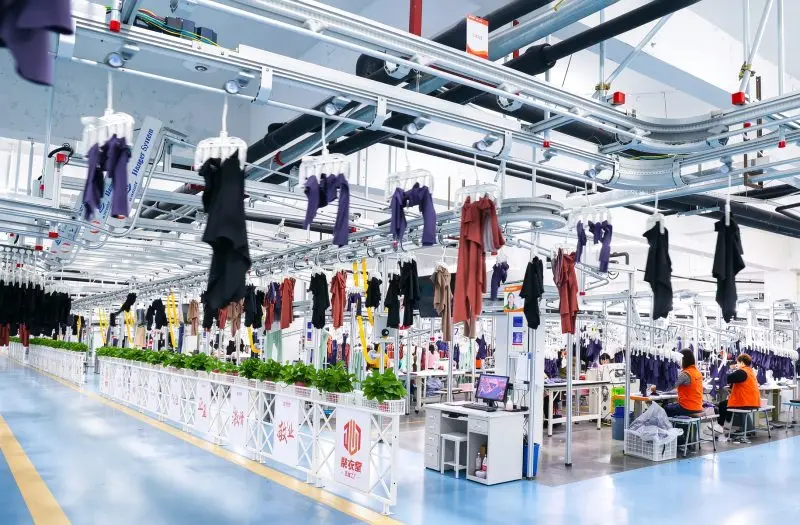
JoeBond is a specialized yoga apparel OEM/ODM manufacturer providing custom fabric sourcing, pattern development, sample prototyping, and bulk garment production. JoeBond helps emerging and established activewear brands select, test, and customize high-performance yoga fabric options for their collections. Its two core fabric options address different collection requirements:
1. Polyester-Spandex High-Stretch Fabric (82.5% Polyester / 17.5% Spandex)
This versatile high-stretch fabric accommodates different yoga and activewear styles. It offers flexibility for brands developing coordinated workout sets, leggings, and multiple colorways.
2. Flowfit Nylon-Spandex Nude-Feel Fabric (80% Nylon / 20% Spandex)
JoeBond’s Flowfit fabric focuses on softness and a close, comfortable fit. It is particularly suitable for leggings, sports bras, fitted tops, and athleisure collections emphasizing a smooth, nude-feel wearing experience.
JoeBond helps brands coordinate fabric matching, color selection, pattern development, and garment sampling. Its fabric quality checks include opacity, stretch, and color-fastness testing.
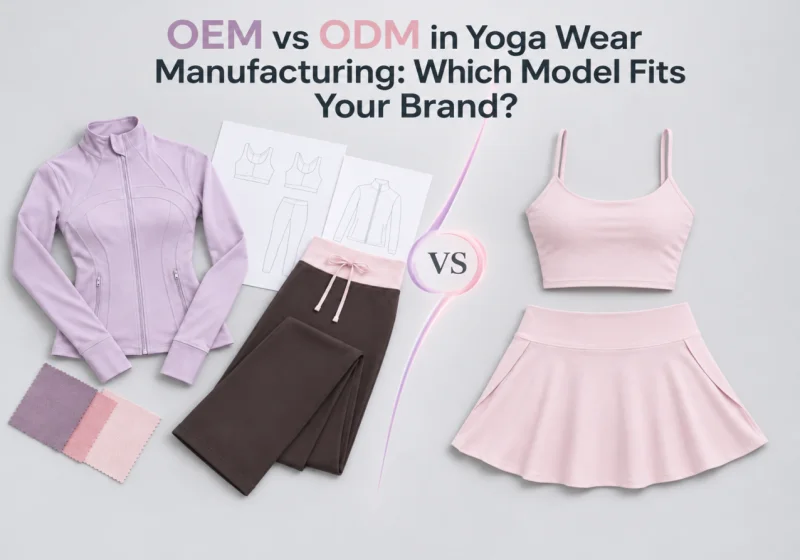
Brands with established designs can explore JoeBond’s OEM manufacturing services, while those seeking existing styles and additional development assistance can consider its ODM manufacturing services. Both approaches help brands confirm product details before bulk production.
Conclusion
Nylon-spandex is often preferred for soft, comfort-focused yoga clothing, while polyester-spandex suits performance-oriented and printed activewear. The right yoga fabric depends on garment requirements, customer expectations, and production budgets.
Looking to develop your own yoga clothing line? Explore JoeBond’s OEM and ODM services for fabric selection, customization, and sampling support.