Moving custom yoga pants from concept to mass production requires a sequence in which each approval unlocks the next production step. We connect fabric performance, waistband construction, contouring, seams, grading, color, branding, and packaging to the same development file so a sampling change cannot disappear when the order reaches bulk sewing.
The commercial brief gives that sequence its direction. Wearer profile, activity, target price, intended fit, assortment role, and launch date tell our team which features deserve development time and which can use proven production solutions, keeping the program scalable from its first sample.
Translate the Design Brief Into a Production Specification
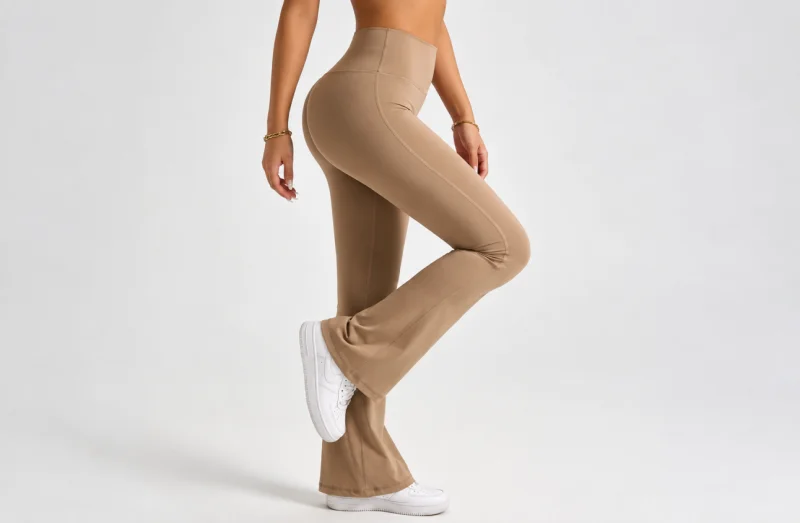
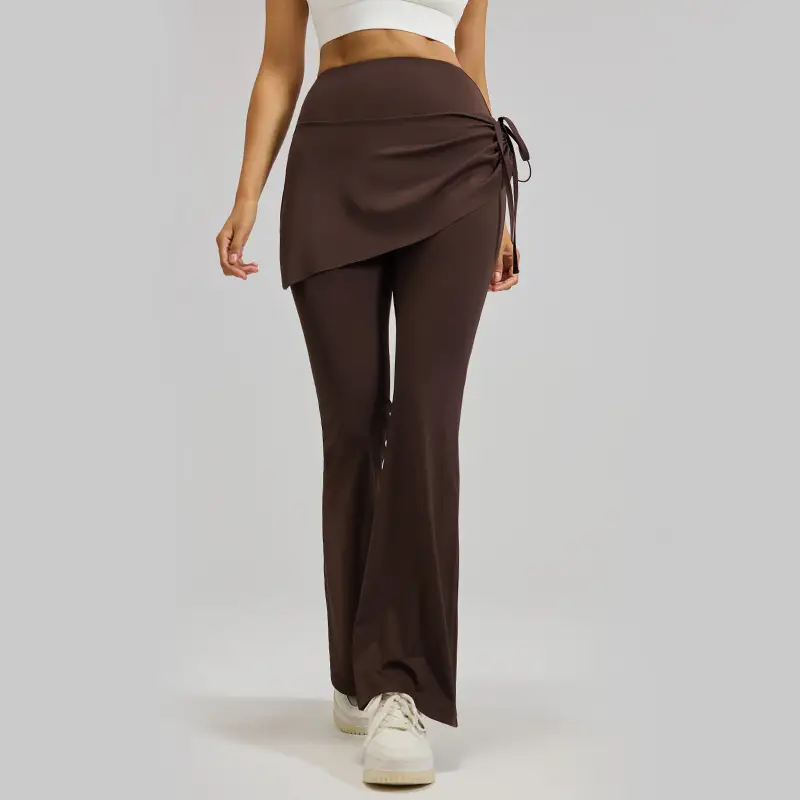
A brief for oem yoga pants can start from sketches, references, an existing sample, or a written concept, but we turn it into measurable instructions. Waist height, rise, inseam, leg opening, compression level, seam layout, pocket requirements, and contour details need clear dimensions or construction notes before we move forward.
Fabric choice is equally important. Available sourcing options range from seamless, brushed, and ribbed constructions to nylon-, polyester-, or spandex-based blends and sustainability-oriented materials. These categories can produce very different hand feel, recovery, opacity, and surface appearance. Buyers should approve the actual material lot or reference standard and test it under stretch before the pattern is treated as final.
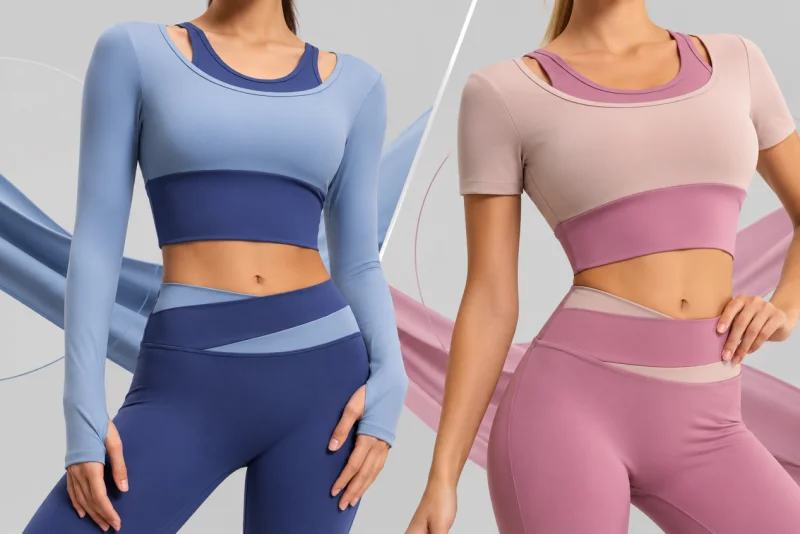
Brand elements belong in the specification from the start. Logo position, woven labels, hangtags, printed patterns, embroidery, and packaging can influence cost and workflow. If artwork or label information is introduced after the sewing plan is already fixed, we may need to reopen completed development steps before production can continue.
Pocket requirements, if any, should be fixed before the pattern is finalized. Side pockets, waistband pockets, and hidden compartments change seam lines and can affect bulk around the hip or waist. Pocket testing should confirm stability with a phone or key inside and show whether the added load distorts the intended silhouette during movement.
We also connect branding choices to construction early. Logo size, position, technique, labels, and packaging are easier to control when they are confirmed before the sample is finalized rather than added after fit approval.
Use Sampling to Resolve Fit, Fabric, and Construction
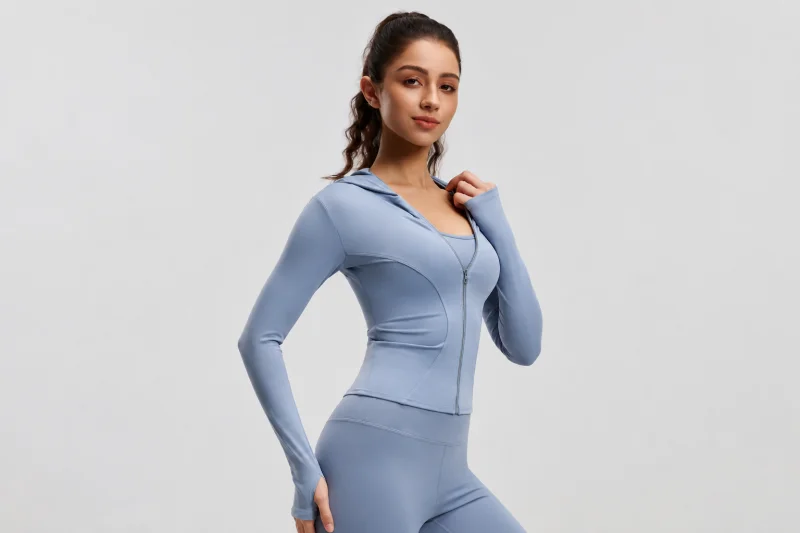
The sample phase should answer specific questions rather than simply produce a garment for visual approval. Custom yoga pants need checks for waistband stability, crotch fit, seam comfort, opacity in deep stretch, recovery after movement, and balance between front and back rise. If compression or contour shaping is part of the concept, those effects should be judged on-body across relevant sizes.
Pattern revisions are recorded in measurable terms between sample rounds. Instead of a vague instruction such as ‘make it tighter,’ we specify the adjustment of waist, rise, thigh, inseam, or leg opening so the next sample and the graded sizes can reproduce the intended change.
Sampling also provides an opportunity to verify branding and packaging. The buyer can confirm logo appearance on stretched fabric, label comfort, hangtag placement, and folding method before the order reaches the production floor. This prevents finishing details from becoming a separate source of late-stage corrections.
Our Joebond sampling and production workflow gives buyers a clear point to consolidate revisions before bulk cutting begins. We focus less on the number of sample rounds than on whether each round closes specific open questions and leaves a documented reference for the next step.
Once fit, fabric, construction, branding, and size grading are signed off, new aesthetic changes should be treated as formal revisions with corresponding effects on cost and lead time. Pre-production approval can then confirm that factory-ready materials and trims match the development sample before cutting commits the full quantity.
Control Bulk Production With Clear Checkpoints
After approval, we follow the locked pattern, material reference, color standard, measurement chart, and artwork file in mass production. Joebond also allows us to support small trial runs and larger-volume production, followed by quality inspection before shipment.
Buyers can use that structure to establish checkpoints for incoming fabric, cutting, sewing, measurements, branding, finishing, and packing rather than relying only on a final random check.
Lead time should be discussed against the actual complexity of oem yoga pants. A simple repeat style using available material is different from a new construction requiring custom fabric, several colorways, and multiple branding techniques.
The most useful schedule identifies when materials are ready, when samples or pre-production approvals close, when bulk sewing begins, and when inspection leaves enough time for corrections before shipping.
Mass production becomes easier when development decisions remain visible. A yoga-pants style supported by a complete tech pack, approved sample, controlled materials, graded measurements, QC criteria, and packing instructions can move into repeat orders with fewer variables. That disciplined handoff is what turns an attractive prototype into a scalable OEM program.
When the style returns, the approved pattern, grading table, fabric code, artwork, labels, and packaging give our production team a stable starting point. Review can concentrate on genuine changes such as color, inseam, or size ratio rather than reopening the complete construction.
That distinction becomes valuable as the program expands into seasonal shades or region-specific fits: the buyer gains variety while the manufacturing baseline remains controlled. Our team can isolate the variables that actually changed, confirm them separately, and keep the approved construction stable for the rest of the order.