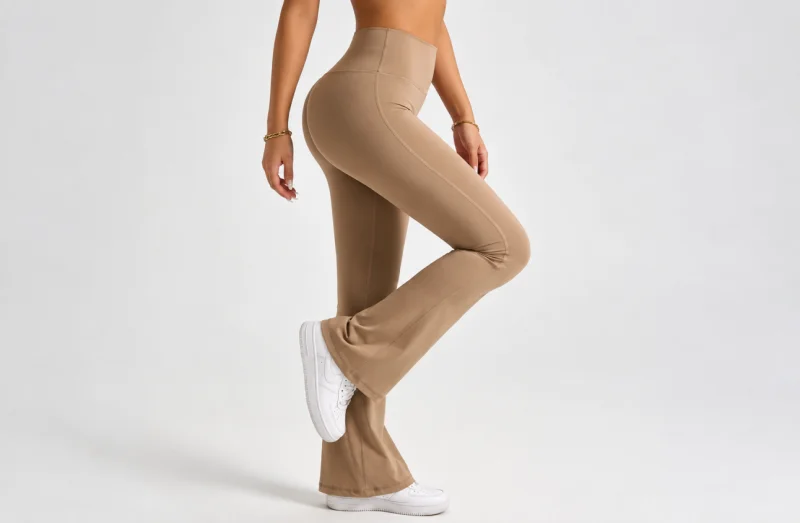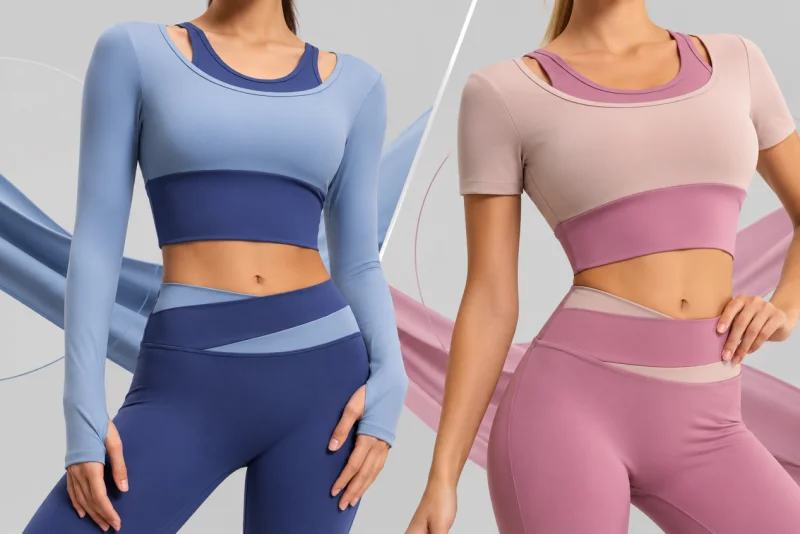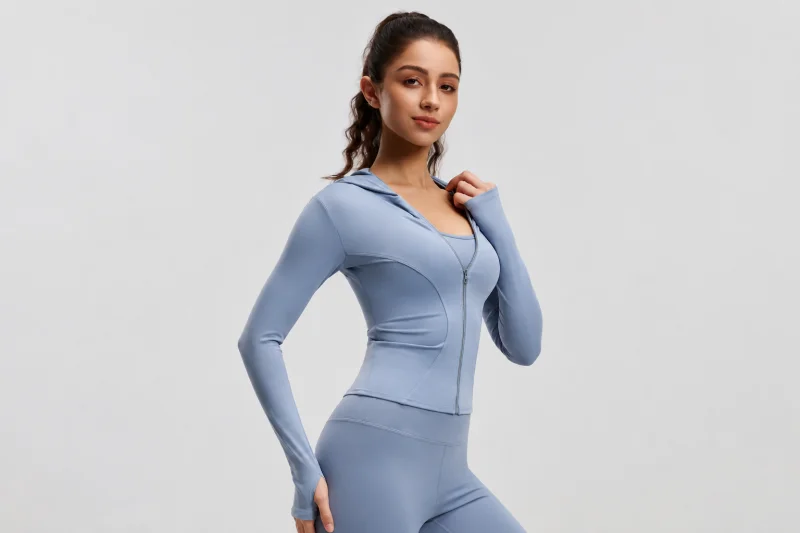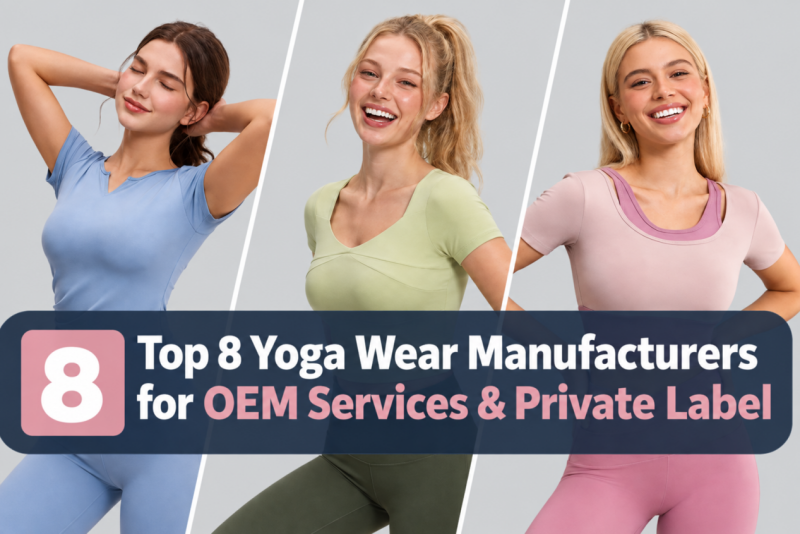
A custom activewear collection needs a commercial architecture before it needs a long list of SKUs. Our planning connects target customer, price position, color story, fit, fabric, size range, branding, launch timing, and inventory role across categories so individual garments can share a recognizable standard without becoming copies of one another.
For custom yoga clothing, we first identify the products that should carry continuity and the products that can carry seasonal change. Leggings, bras, tops, jackets, pants, and skirts are then assigned roles in the range, allowing fit, color, development effort, and supply timing to be coordinated around how the collection is expected to sell.

Create a Collection Architecture Before Developing Every SKU
Private label yoga clothing becomes easier to manage when each style has a defined commercial role. A core legging may be designed for repeat replenishment, a bra can complete the training set, a jacket can add layering value, and seasonal tops or skirts can introduce new silhouettes without changing the entire fit system.
Shared decisions are established only where they add value. Size conventions, brand colors, logo rules, labels, packaging, and selected fabric families can serve several garments, while product-specific construction remains free to follow function.
Not every garment needs the same textile. A bra may require firmer support, a top may prioritize drape or breathability, and leggings may need stronger recovery and opacity. We use common performance goals where appropriate while allowing material specifications to change according to construction and intended activity.
Collection economics benefit from that separation. Shared standards reduce unnecessary duplication, while garment-specific materials preserve function. Style-level costing can then be compared without losing sight of the combined minimum quantities, material commitments, and production timing created by the full assortment.
Color planning benefits from the same discipline. A small number of coordinated core shades can link multiple categories, while limited accent colors can identify seasonal pieces. We confirm color on the intended materials because the same target shade can appear different across nylon, polyester, ribbed, brushed, or other surfaces.
Assortment size is also a supply-chain decision. Adding more SKUs increases sample work, material combinations, size ratios, labels, packing variants, and inspection points. Prioritizing styles lets us concentrate development resources on products that have a clear role in the launch.
Turn the Architecture Into Samples and Production Standards
Pattern work translates the collection plan into measurable garments. We develop or adjust patterns according to sketches, target measurements, fabric behavior, and intended fit, then use samples to review movement, coverage, proportion, and construction before grading and bulk production.
Through Joebond, our OEM and ODM workflow links pattern work and sample approval with material coordination, branding, labels, packaging, manufacturing, and inspection across multiple activewear categories. This allows shared brand standards to stay visible while each garment keeps its own technical specification and approval path.
Sample rounds do not need to be identical for every style. A new fitted legging may require detailed fit comments, while a supporting top based on a proven block can need fewer revisions. We allocate approval effort according to technical risk and the importance of the style within the assortment.
Branding is handled as a system as well. Logo scale and placement can change with garment construction, yet artwork, color references, labels, hangtags, and packaging should still communicate one identity. We test each application on the intended material rather than forcing a single decoration method onto every product.
Once samples are approved, the production file captures measurements, materials, colors, construction details, artwork, labeling, packing, and acceptance points. This gives purchasing, production, and inspection teams a common reference when several styles are moving through the supply chain at the same time.
Balance Customization, Speed, and Replenishment
A complete custom yoga clothing program does not require every unit to follow the slowest development route. Buyers can combine deeper custom work for signature products with stocked or faster-to-produce supporting items when the launch calendar calls for a different balance between differentiation and speed.
For repeat private label yoga clothing, approved specifications create leverage. Core styles can return in new colors or size ratios without rebuilding the product from the beginning, while seasonal designs can remain more flexible. This distinction helps inventory planning because replenishment and experimentation are not forced into the same forecast.
Our supply structure also supports substantial activewear capacity and ready-stock availability, giving collection planning more than one response to demand. The customer program identifies fast custom-production targets for larger quantities, but those schedules still depend on timely confirmation of materials, samples, artwork, and order details.
Once production begins, quality control links the separate styles back to the collection standard. Fabric, measurements, stitching, branding, and packing are checked against the relevant approvals so coordinated sets and related colorways arrive consistently without being treated as unrelated items at final inspection.
Joebond allows us to coordinate customization, ready-stock options, manufacturing, inspection, and delivery within one collection plan. Range expansion can preserve fit logic, brand identity, and launch timing by using deeper development where differentiation matters and faster supply where continuity matters more.