The global athletic market is experiencing a massive surge in demand for versatile, high-performance activewear that seamlessly transitions from intense studio sessions to everyday wear. For retailers and private label brands, sourcing the perfect daily training yoga sports bra requires balancing biomechanical support with long-term textile durability.
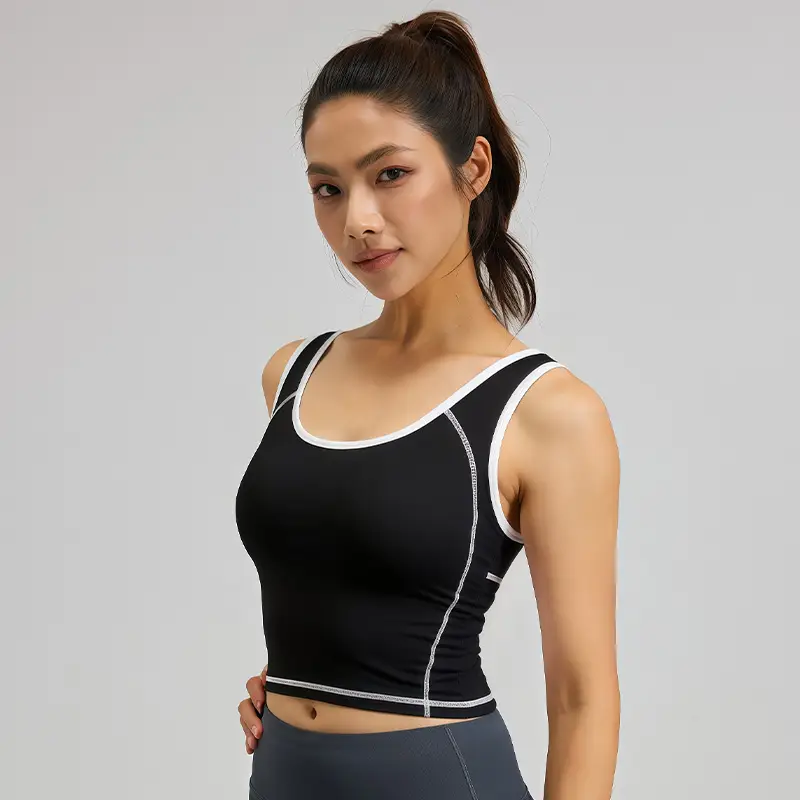
Understanding how fabric weight, elastane tension, and construction techniques interact is essential to capturing this lucrative market segment. When expanding your inventory, partnering with an experienced manufacturer can help you secure high-quality custom sports bras that meet the strict requirements of modern fitness enthusiasts.
Deconstructing Fabric Engineering and Moisture Management
Daily training demands a careful equilibrium between compression and breathability to ensure athletes remain comfortable over long periods. High-performance yoga bras are typically crafted from premium nylon-spandex or polyester-spandex blends, chosen for their ability to deliver excellent opacity while preventing excess heat and moisture buildup—even through the most intense movements.
The precise ratio of elastane determines the fabric’s modulus, which dictates how effectively the garment stretches and recovers. Lower-grade textiles often stretch out permanently after a few wash cycles, leading to structural sagging and a total loss of supportive compression. Brands must prioritize double-knitted interlock fabrics to guarantee four-way stretch capabilities.
Moisture-wicking technology must be integrated at the yarn level rather than applied as a temporary topical chemical finish. Topical treatments wash away quickly, leaving the wearer with a damp, uncomfortable garment that can cause skin irritation. Yarn-level wicking relies on engineered microscopic channels that continuously pull sweat away from the skin toward the outer fabric layer.
By focusing on these raw material technicalities, wholesale buyers can ensure their product lines withstand the rigors of daily athletic use. At Joebond, we analyze these mechanical textile properties to engineer activewear lines that maintain their structural integrity over hundreds of active wear and wash cycles.
Ergonomic Pattern Cutting and High-Impact Support
Support in a training bra is achieved through a combination of encapsulation and compression rather than relying solely on tight, restrictive elastic bands. Encapsulation cups isolate each breast to minimize movement, while compression presses the tissue firmly against the chest wall. A well-designed daily bra blends these two methods seamlessly.
The curvature of the front panel must accommodate natural anatomical shapes without creating uncomfortable pressure points or restricting deep diaphragmatic breathing. Designers utilize advanced 3D pattern software to map stress distribution across the shoulders and upper back. This engineering reduces the physical strain commonly caused by poorly distributed strap tension.
Wide, stabilized shoulder straps are critical for dispersing weight evenly across the trapezius muscles, preventing deep digging and tension headaches. Racerback designs offer the greatest range of motion for the scapula, which is particularly beneficial during complex yoga transitions. Standard straight straps can slip during dynamic overhead movements, distracting the athlete.
The under-bust band serves as the structural foundation of the entire garment, providing the vast majority of its overall supportive power. This band must be wide enough to prevent rolling or flipping when the wearer bends forward. Utilizing specialized stitch construction ensures this critical component remains flat, stable, and highly functional.
Advanced Stitching Techniques and Friction Reduction
Chafing is one of the most common complaints among fitness enthusiasts during long training sessions or humid outdoor workouts. Traditional raised seams rub continuously against the skin, causing painful micro-abrasions after repetitive motions. Premium athletic manufacturing eliminates this issue by utilizing specialized flatlock stitching machinery.
Flatlock seams join two fabric raw edges flush together without any overlapping layers, creating an exceptionally smooth, irritation-free interior surface. This technique requires specialized multi-needle industrial machines and high-tensile texturized nylon threads. The resulting seam is just as strong and flexible as the main body fabric itself.
Another premium option gaining rapid traction in the global B2B activewear sector is seamless circular knitting technology. This method eliminates side seams entirely by knitting the garment body as a continuous textile tube. It allows for targeted compression zones to be engineered directly into the fabric without adding extra bulky seams.
For premium retail collections, bonded edges offer a clean, minimalist aesthetic that completely eliminates traditional sewing threads. Ultra-thin adhesive films are applied under precise heat and pressure to create durable, flat hems. This clean construction is perfect for modern consumers who demand sleek, invisible profiles under tight-fitting workout tops.
Navigating Custom Sports Bras Design Customization
Private label brands need distinct aesthetic variations to stand out in a crowded digital marketplace while maintaining core structural functionality. Customization allows businesses to tailor designs to specific regional sizing distributions and unique consumer stylistic preferences. Working with an agile production partner makes executing these complex design changes highly efficient.
Customization options often begin with neckline adjustments, ranging from classic scoop necks to elegant high-neck variations that provide maximum coverage. Back configurations can also be modified with intricate strappy patterns or laser-cut ventilation panels. These functional cutouts enhance airflow while adding an undeniable premium visual appeal to the product line.
Removable padding systems represent another critical customization touchpoint that directly impacts the garment’s overall versatility and consumer satisfaction. Molded foam inserts must be placed in carefully engineered internal pockets that prevent shifting or bunching during laundering. Offering breathable, perforated pads elevates the perceived value of the product.
Sourcing high-quality custom sports bras requires clear technical specifications detailing every measurement, fabric weight, and thread type. Experienced manufacturing partners can transform basic design concepts into production-ready tech packs that ensure precise replication. This collaborative engineering process minimizes sample revisions and accelerates your final time-to-market.
Supply Chain Sourcing via Wholesale Sports Bras Channels
Procuring inventory through established wholesale networks offers significant cost efficiencies and stabilizes product margins for growing businesses. Bulk purchasing reduces raw material costs by allowing manufacturers to negotiate better pricing on technical yarns and specialized components. These component savings are then passed directly down to the business buyer.
However, wholesale purchasing should never mean accepting rigid, generic designs that fail to resonate with your target demographic. Modern supply networks offer extensive semi-customization options for catalog items, including custom brand logo printing and unique color dyeing. This allows wholesalers to build cohesive, branded collections without incurring massive development costs.
Maintaining strict quality consistency across thousands of production units requires rigorous, multi-stage factory quality control protocols. Inspections must occur at the raw fabric stage, mid-production, and during final packaging to catch defects early. Reliable suppliers provide detailed inspection reports before any inventory leaves the factory floor.
For large-scale international distributors, working with a vertically integrated partner simplifies logistics and shortens overall production lead times. Managing everything from yarn spinning to final packing under one roof reduces multi-vendor communication delays. This integrated approach helps ensure your wholesale sports bras arrive on time, every season.
Quality Control Standards and Durability Benchmarks
A premium training garment must maintain its structural properties under intense physical stress and repeated commercial laundering cycles. Industrial testing methods evaluate fabric performance metrics like pilling resistance, bursting strength, and colorfastness under sweat exposure. Meeting these international testing standards is non-negotiable for brands aiming for long-term customer retention.
Elastane degradation caused by body oils and laundry detergents can quickly destroy a garment’s elasticity if low-grade materials are used. To prevent this, premium manufacturers utilize stabilized spandex fibers engineered to resist chemical breakdowns. This specialized material ensures the bra maintains its original compressive fit for years.
Colorfastness testing ensures that vibrant hues do not bleed onto lighter garments during intense workouts or intense wash cycles. Fabrics undergo rigorous testing under simulated wet and dry friction conditions to guarantee total dye stability. This meticulous attention to technical detail protects your brand from costly product returns and negative customer reviews.
Partnering with a fully certified manufacturing facility ensures compliance with international environmental and safety standards. These certifications guarantee that no harmful chemicals or heavy metal dyes are present in the finished textiles. Joebond maintains a modern production infrastructure that prioritizes these precise quality benchmarks for our global B2B clients.
Balancing Technical Functionality with Market Profitability
Building a successful activewear brand requires balancing premium technical features with realistic manufacturing cost structures. Investing heavily in advanced fabric technology and seam construction can increase initial production costs but reduces long-term return rates. High-quality products naturally drive organic word-of-mouth growth and repeat business.
B2B buyers must evaluate the total value proposition of their manufacturing partners, including communication speed and shipping support. A low unit cost can be easily erased by unexpected shipping delays, customs clearance issues, or poor communication. Clear transparency throughout the production lifecycle is essential for smooth business operations.
Market trends show that modern consumers are willing to pay a premium for versatile training apparel that delivers on its performance promises. By offering products that solve common pain points like chafing and sagging, brands justify higher retail price points. This strategic positioning maximizes profit margins while building deep, long-term brand loyalty.
Sourcing from an integrated OEM/ODM manufacturer allows brands to scale their operations smoothly from initial small test batches to high-volume production. This flexibility helps businesses manage capital efficiently while responding dynamically to real-time market demands. Investing in well-engineered products creates a strong foundation for sustainable brand growth.